Can you trust your mind?
What if the mind you trust is running a four-year-old’s survival code?
Rob Brinded, author of Glitch: The Hidden Code Running Your Life (And How to Debug It), joins Shawn to reveal how childhood programming creates unconscious “hamster wheels” that determine who we trust, why we repeat patterns of betrayal, and how intelligent people make devastating choices. This conversation maps the five binary programs installed in early childhood that run our lives—left-siders seeking value through people-pleasing, right-siders compulsively achieving to avoid disappointment, both trapped in wheels that inevitably flip.
If someone keeps getting betrayed, it's because their operating system needs that.
— Rob Brinded
Timestamps
Resources
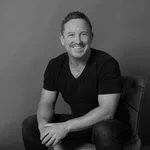
About Rob Brinded
Rob Brinded is a mind coach and author of Glitch: The Hidden Code Running Your Life (And How to Debug It). Working with elite athletes, founders, and executives, he helps clients identify and dissolve childhood programming that drives self-sabotage, addiction, and misplaced trust. He combines Eastern philosophy, somatic observation, and Bitcoin-inspired thinking to guide clients into 'admin mode': the ability to watch and reprogram their operating systems.
Transcript
Show full transcript
If someone keeps getting betrayed, it's because their operating system needs that. You can see that it's, you know, like vast ways of humans are like screaming at each other and not realizing that the only way to change that is to see the wheels. So with Bitcoin, what that does is you are in the system and then you start going, oh shit, like this is a wheel. Like it's happened before many times and you start questioning the whole system and you go, I don't want to be in that system anymore. And so you step out of it and you create a new one. Rob, welcome. Thank you very much. I know you are freshly back from holiday and so appreciate you squeezing and making the time to join as you're recovering from a whirlwind trip. Um, so what I want to pursue today, Rob, and why I was so excited when I followed you on Noster and discovered your work and started to dig in, read your book, uh, bought it with Bitcoin, which is an added bonus is in the lens or through the lens of Trust Revolution Trust, this project, um, my takeaway, maybe I'm mapping, but my takeaway from studying your work and reading your new book glitch is this.
we've been trusting the wrong things, not just banks or governments, but our own minds, our thoughts, instincts, you know, our gut feelings. And what I think you're telling us, Rob, is that we're running these glitchy programs installed in childhood, designed for a world in which most of us no longer find ourselves, a world that no longer exists specific to our lives and, you know, never step in the same stream twice. And so, you know, what I read and take is that these programs, as it were, don't just make us suffer. They make us trust the wrong people, the wrong systems at the wrong times. And I probably shouldn't say they make us, but they lead us to. And so with all of that, unless I've gotten that, you know, terribly wrong, my first question is really about repeated betrayal, maybe self-inflicted. And so someone repeats a pattern. They keep choosing romantic partners who abandon them or they stay loyal to leaders who exploit
them. They recognize it, but they can't stop. So what's the actual mechanism? Why doesn't awareness break that cycle? That's a great question. I like what you said make, because they do it does it makes there's no um it's a a deep play it's an operating system that fires up when we wake up and so it's like um on my mac when when the operating fires up i'm not really aware of what's running in the background it it just gives me what i perceive as reality and yeah what i've um what i've come to understand is that um you know your question was about betrayal so what i've come to understand is that there are five very simple deep operating systems that that create our reality and and make us how we are unconsciously counterintuitively
always giving us what we want when we don't seem to want that, if that makes sense. So with betrayal, if someone keeps getting betrayed, it's because their operating system needs that. So for example, if you're on the left side of, I don't want to jump in too much for someone who hasn't read the book yet, but the way the mind works is through very simple programs from childhood. So it's a child. So it's very binary. So let's say if you're on the left side of the hamster wheel, that's where you reside. What that would mean is that you support everyone in order to try and get your needs met. But your needs cannot be met from that centralized binary system that you've created. So let me describe the hamster wheel, which is the program. it's support and the opposite word that I came up with from listening to many clients was let down
like you you support a child or you let them down so if you're on the left you go up the hamster wheel and you spend your time people pleasing and supporting others but you are never supported back and you feel let down you but I supported them why don't they support me back For a left-sided, they want to be up here, but they're safe on the left, in letdown, as a disappointment. So even though that is massively, observably harmful and negative, it's where we feel comfortable and therefore we return to that place. A hundred percent. So these are defense systems created by a child who's scared. And so what I say is like what we're all trying to do within the system, and I say we all, all humans, because maybe there is someone that doesn't work with a mind, but it seems that the operating systems comes with the unit of a human, right?
And so when that left-sided person is up there supporting others, because they didn't get their needs met of love, connection, belonging in childhood, so they want the next best thing, which is being valuable to others. So valuable is like plastic love. It's an illusion. There's nothing, you know, you'll get a little high when people go, oh, wow, you're so kind, nice boy, you know, well done, or, oh, an Oscar, or you win a gold medal at the Olympics. Dopamine? Is that good old dopamine? Yeah. But immediately, I've worked with athletes who've said, you know, they got the gold medal. And instantly after they got it, they spun back to the other side. I'm jumping forward a little bit. But let's say so that the left side, you can see that it's a hamster wheel. Because you run up and if you watch a hamster, they either flip themselves over, kind of they go too fast, but they always flip over and the wheel balances.
The wheel never continues. You never see someone who can keep the wheel balanced. It's an impossibility. So you put all your energy to the right because you're desperately trying to be valuable in others' eyes, but the program is glitchy and you don't deserve to be there. So you either get completely exhausted or you flip over. And so then you experience letdown. So I get clients who come see me and say, you know, my partner, I, you know, I'm really kind. I'm trying to do everything with my kids or whatever. But then I feel let down by them or I feel like I'm letting myself down. So that would be a left-sided position on that particular wheel. If you're on the right, you can support yourself. so you you create it's a binary you're either left on the right okay this is and you don't don't trust don't trust me verify you know if you watch you'll see that it's a protocol that is it's
runs on these five wheels so if you're on the right then you you support yourself you're confident and you usually marry someone who supports you and you love value you love being valuable and you know what valuable is so you usually get the type of yang dominant right-sided who very wealthy or elite athletes are on the right and they hate being a letdown being a disappointment is unacceptable. They cannot deal with that. So that's why they don't do internal work because you have to face that. So they're up on that right side putting energy in at all costs. But it's inevitable, as the Buddhists would say, the more you try and reach the zenith, the more you get the nadir. And when a right-sided hits his point,
He flips hard. And you just need to see it in, I was watching Alex Pereira, the UFC fighter interview earlier. For some reason it popped up and he was saying he was working, you know, he was traveling too much. He was fighting too much because he loves to do it to distract himself. All the right-sided people distract themselves and they use substances to try and distract them from that wheel. And so he was saying that he burnt out and he broke his shin, which is how a right-sided person experiences the opposite side is it is forced upon them. Right. So they get flipped hard. So when I work with a right-sided person, it's when they hit the disappointment hard and they have much more difficulty there because that is not safe.
they are safe being supporting themselves and when they can't inevitably as a as the unit as i see it like you create your reality and if if you watch that don't trust me if you look you'll see that there everything is coordinated with your perception and your hamster wheels it speaks to me deeply i am definitely on the right side of that wheel okay okay and so yeah When I'm working with a right-sider, they – and every – you know, it's not right and left like in America. Yes. We should underscore that. We're referring to the wheel. There will be links in the show notes to the fact this is in fact a series of wheels that you refer to in your work. Yeah. You can see it in politics and Twitter and everything. Certainly. Yes. What I notice is that people on the right, to experience micro, let's say they're so able, they will balance out their wheel by experiencing the opposite, unable, unableness, by having a vice that they cannot control.
So addictions are just trying to get out of the wheel. They call it chasing the dragon, heroin addicts. Certainly. Or alcohol. And they go there, they come back and they experience what straight afterwards? Unableness. Right. So it's inevitable. It's a system, a closed system loop that is like a protocol and a VR. It's kind of like VR. And people are trying harder and harder, putting their energy in. But the game's rigged. It's glitchy. And so the Taoist knew thousands of years ago, Lao Tzu knew, he said, you know, it's Wu Wei. The only way to do is through non-doing, observing your habitual operating system. Fascinating. And I'm, yeah, I could spend so much time here. I love this stuff. And as I say, you know, right-sider, fortunately, not as a disclaimer, you know, I don't have the curse of addiction, but I can observe in myself that it is when either something I perceive to be a failure, I get sick, I get worn down, you know, I'm better than I used to be.
But that's when I can recognize that those are the moments that I'm quietly grateful for because they allow me to rest. Yeah. They give me an excuse not to achieve, perform, whatever that looks like. And then I'll ask another follow-up question here, I suppose philosophical, but important to me, is what's really striking about what you said, Rob, is as someone who spent a fair bit of time studying Eastern philosophy, thinking about non-duality, but recognizing that what you said feels very true, that it is binary. It's one or the other. We're on the right or the left. We flip. There is no balance in effect. Is that, you know, unless maybe somebody at the top of a mountain in Nepal perhaps, but certainly not in my life. So most of us, we're operating in one of these two modes, not in between. There's no opening yourself up to the other side is the way.
and if you um you learn about the self so meditation for me means understanding the self you know yes krish kristin amurthy's you know saying um it's understanding the self which is like a black box it's just uh this just churning out the same old hamster wheel oh you know it's just running and so um if you go in a monastery and you don't have kids you don't have a wife you can't know yourself yeah you can become extremely quiet but there's no there's no truth there you are artificially uh quieting things to and it's so you know you have a kid Like, try and be Zen, you know, when you have a kid jumping on your head.
That is the greatest area of practice. But it is. So you cannot know yourself in a monastery. But Buddhism is wonderful. Yes. You just have to listen to what Buddha said. My butchered take on it is like he sat on a tree and he went, oh, I've got it. It's just the mind. And just watch it and don't, you know, there's anything in the idea. And then he said, that's all you have to do. Watch your mind and don't follow me. And then, but humans love to follow because they're desperately after certainty, hamster wheels, certainty programs. Well, and that's a great segue to my next question, which is so, and if not obvious, a big fan of the book and I do recommend and we'll provide a link to that. It has, as I mentioned before, we started recording, many things clicked for me and I'm sure we'll continue
to. So you've mapped these, or in the book rather, you map these five hamster wheels and we've talked about a couple of them, these programs installed as it were in childhood in response to whatever environment, be it traumatic or some other disconnected. Thank you. Connected or disconnected, as you say in the book. So to address disconnects in our lives as children, we develop or these programs, as you say, are installed. Could we zoom in a bit? How do these programs, this operating system, how does it determine who we see as trustworthy? How does that map on to who we choose to trust? Well, there's no trust in them. if you think about it the the disconnect happens maybe you know even before birth I don't you know I'm not we don't need to go too much I always say to clients you know like if you want to try and remember but most people especially if it's extremely traumatic they don't remember anything
about childhood so if you imagine let's say you're born into two parents who are disconnected how many people are disconnecting everyone and so you experience disconnect and you blame yourself there's no there isn't it i was i would say it's like a light switch it's you can't have it like half on it dim right it's on or off and so people go yeah but my parents were not like how many people find it how many people how many parents are constantly with their kids and fully connected and completely unconditional. It's extremely difficult, especially in our modern world, right? And so it's a one or a zero. And everyone I've gone through says, yeah, there's a zero. There was a disconnect. So disconnect moves, you know, if there's a disconnect, it means you're not, you experience that as an abandonment, no trust. That point The trust is gone.
And then the next thing is if you're abandoned, you don't throw things that are valuable. You don't abandon them. You don't throw things away. You don't throw your Bitcoin away. It's valuable. So you don't throw – you chuck things away that you don't value. So when a child logically experiences kind of things, I'm abandoned, or experiences a disconnect, abandonment, then they perceive that they're worthless. This is, you know, it's possible that it happens in minutes from when they experience the disconnect. So there we have the worthlessness, that initial disconnect like the gold standard. Right, right. And so it becomes untrustworthy. And then you either, and I don't know why, but you either choose the right or the left to try and be valuable. Now, being valuable to others means you don't trust that you're enough.
Okay. Extrinsic versus intrinsic. Exactly. And so you get, I mentioned it in the book, Sylvester Stallone in his documentary, which was excellent, very, very open. He said at the end, I realized after 80 years that I spent my whole life trying to be valuable to my audience to get their love. to realize that it was an illusion. And there was no worth there. And all the time it was my children and my family that were there that were the most valuable thing. But because of his hamster wheel, he is jammed up hard on the right. So he would have experienced deep left-sided experiences in his life. and so uh he didn't trust himself to be enough so he became legend you know celebrity is that the left they don't trust themselves and so they spend all their time trying to be nice to others
and trying to be more able to be valuable to others the system's built on um uh uh a flaw that like there's that is the initial birth of the the mind it's untrustworthy and that there's fractals to that i mean you can go in and look at your life and your parents and then your family you know the family and society which reflects back at us right distrust well and perhaps the the and that's really interesting to me and it's an important point i would think to underscore that in those environments, in those settings of situations with these programs running on these wheels, these hamster wheels, we're not, we're simply not thinking consciously or making these decisions about trust. It is just, we are driven by, I don't know if urges are the right word, but, but these compulsions to, to be, to be valued, to, to, to seek out that which we,
we desperately lack. And so maybe the better question is what sorts of, of well people are able to make sound decisions regarding trust there themselves others their community You know so that perhaps an overly vague question But so the inverse of what you've just discussed, what puts us in a position to make sound decisions about simply, you know, choosing to trust ourselves, our family, our guts, as it were, versus, I guess, being subject to the whims of media and messages and manipulation. What does good look like in that regard? Yeah. So, first of all, within the system, you have people who become extremely valuable by making
trustworthy decisions. And define valuable in that context, please, Rob. Let's say Jeff Bezos. Like, he seems to be good at what he does. he's made a company that's extremely valuable because everyone trusts it. Yes. With that, I mean, my parents don't like it because they don't pay tax in the UK, you know, like they should pay rich, you know, he's a billionaire. But objectively as measured by revenue, his personal net worth, et cetera. That's correct. However, him, to trust yourself, you have to understand yourself. And that can only come from, in my first book, I called it decentralized mind, but it comes from observing your habitual drives that are not intelligent. They are survival programs. Right. So when, if you look at NOSTA, let's say, there's a lot of people posting, they're going down rabbit holes and getting angry.
Right. You know, what they're looking for is the truth. Bitcoin is a desperate for the truth. Yes. Because they don't want to be unable. Yes. And they want to be safe. So all Bitcoin, everyone who's in Bitcoin, they know how valuable it is. And they're either the right or the left. They know there's something extremely special about this. And so everyone's looking to be safe. So the left, they trust in it because it's this thing on its own. It's a protocol and TikTok next block. You can trust it. However, you see with the knots and the core, you're getting extreme language because there's a lack of trust. But it's all of their own hamster wheels getting triggered. And they're feeling unable, like core is doing this and there, and you can hear the fear behind
the anger. Right. That's how I look at it. And so what I do is when I see that, how can I know who to trust? How can we know? What we do is we observe our fear. That's the only thing I can trust is, is my mind. The only thing I can trust about my mind is that it, it moves and works and I watch it and I get to know it. That is the only thing I can trust. And, you know, Bitcoin, like I know that Bitcoin sort of does its thing. It's remarkable. But I can't know, you know, someone recently was saying chemtrails, you know, they're doing this with chemtrails and chemtrails. And I thought when I think about that, I feel fear because it makes my, it triggers my hamster wheel of being unable, the wrong, it's wrong. They're damaging the environment, which will make me unable, my kids unable. So the only thing I know
for certain about chemtrails is that it triggers my, and this is something individual that you have to go through yes but if i want to change that out there the only thing i can do is change my internal coding and and move into that admin mode right and so i could become and i've spoken to so many people about this one thing i could go out there and fight and force but if you watch you're in the mind and you're going to get the opposite you the more you force one side of the wheel yang you you'll get the yin the unableness and so what i do is if i want to change the game which is rigged and glitchy well i have to work on my on the code that is creating it yeah that's so powerful and it's i am struck by in this moment how despite reading a hundred books
no exaggeration you know there is there is only the practice that matters right and so So, you know, above the neck, below the neck. And hearing you say that reminds me and frankly causes me to reflect on the naivety of asking the question I asked in a way, right? Which is that how do we know what to trust and who to trust? And what you're telling us very critically is that everything, you know, as I think Buddhist thought tends to go to many, many wonderful metaphors and one of them being the dirty mirror, you know, and the fact that we're seeing ourselves and we're seeing the world through a fog or a dirty mirror and the way to clean that. How can you trust that reflection? Right, right. And to only, you know, the only method to do that is to know the mind, to be present and to be aware. Yeah. And that is very profound. And let's dig in a bit more, and I'd love to draw more of this out for those who perhaps are not so familiar with the material and with the subject matter.
So, you know, I have, I'm sure you have watched and you've referenced this and you do in your book and in your work and in your coaching, highly intelligent people, founders, executives, the technically sophisticated Bitcoiners, you know, as we'll use that as a bookmark for those who are generally quite technically sophisticated. make what I think are obvious mistakes. And it is they're staying in toxic relationships, romantic business, otherwise, ignoring screaming red flags, sirens in their lives that we maybe it's, you know, we've got that buddy who we want to flog because he just won't, you know, wake up and sort of see what we see. They have all the information, but they still get it wrong. And so this is another take at what I know we've discussed, but perhaps again to sort of further draw this out. What's happening in those situations? How does the programming override intelligence, intellect, and access to information? Yeah. Like if you look at the Fed.
Great example. They're clever, right? They're much more clever. 5,000 PhDs, was it? I think the latest stat I saw. Yeah, they're much more clever than me. 5,000 PhDs. We could say, yeah, but dealing with second and third orders and the complexity of the economy. But what I'm talking about is, can that system be saved? Can you change anything within the fiat system? Well, you can pull some levers, but you're in a closed system and you have to create a new system. You can't change the system from within the system. Jeff Booth, right? Yes. And others. And so when you use your interlite, you're running hamster wheels. You're running four-year-old. You're four-year-old. And all of them, like his one, and it's almost like I shouldn't say it, like David Deutsch.
Deutsche Bank. No, no, forget me. He's the branding guy. David Deutsch, the philosopher, the epist... Oh, epistological? Yeah, yeah. Epistological? I missed that by a mile. Okay, got it. Naval says he's the king. Okay, okay. One of the most intelligent people. And so I'm like, I keep an eye on him. I'm like, okay, what can I learn from him? And then I go on his Twitter and he's anyone who says anything about Israel. Okay. And I'm not, I don't want to get into that. I'm not. No, we don't need to disclaim. I think it's just objectively true that that is a hot button. He blocks them and says, you're completely brainwashed and you're in denial. What program is he running? Ah, well, he, you know, he is nicely on the right and doesn't like to be made unable. And I'm going to keep underscoring, we do not mean right political spectrum.
We mean the right side of this particular hamster wheel. No, no, no. Here's another one, Nassim Taleb. Yes. He creates the book Anti-Fragile. Yes, and becomes incredibly fragile. It's inevitable. Yeah, yeah. And you go... Well, it helps, and why is it inevitable, Rob? Because he's running inside his mind. His ego identity, the mind is what is. So he's fully in his intellectualized system, but he doesn't realize that the underlying, like I can do amazing things with my Mac, but if the operating system's glitchy, it's going to go wonky, right? Right. So Nassim Taleb is like so far up on the right and he's so, the harder you put the energy in, you're going to flip and experience the opposite, which is people saying he's fragile and worthless. Would he accept it? No. That is denial.
It's the inability to see your own unableness. So the harder you are on the right, the more you're going to experience the left. Very powerful. And I think, I mean, you know, again, I just keep reflecting on my own stuff, which I won't dump into this conversation, but it is just, yeah, I am experiencing the truth of what you're saying. Yeah, you know with Bitcoin, when people say, oh my God, it just changes you. When you see something that's truthful, you shine light into darkness. Yes. And so, like I said, what I did was I was on a farm in Germany writing my first book. And there was something that happened where I just said, I have to watch my mind now. I remember it clearly. There was no one around. It was deadly quiet. It was uncomfortably silent and dark and cold in the winter.
My family was like 20 kilometers away and I was writing. and I was purely alone and I just started watching. And I mean, that's when I took full responsibility. I said, I have to stop. I have to stop this habitual that I'd seen. I'm 53. I've seen it so many times. And so I started to watch and through watching, and then as I explain in the book, which I think I find that fascinating myself is someone said to me, yeah, I've got this and then that. And I was writing on my board over here and I was like, and then I drew the circle. And so through observing, I saw this protocol, like an open source behavior and everyone said, oh my God, that's me. And it developed from there and put a hundred percent just from my own watching of myself. And so when you see the truth, I wrote an email about it.
There comes a point where you can't improve the iPhone anymore, like the shape. It looks like an iPhone. Diminishing returns. Diminishing returns. And so it comes to a point where something's good. You can't make it much better. It's kind of like an airplane wing. you know you it's a sort of incremental changes have occurred to that over the last 50 100 years exactly but it's now it's you everyone goes as an airplane wing and so when you start to watch and you see the wheels and you start to you go oh my god yeah it's as clear as day but it it takes responsibility and i would add certainly my own life as as you know many many many wise people have said is that without awareness, we fall back into it moment by moment by moment by moment. And that is the challenge, I think. You're either present and you can't force presence. I did that. You know, I read Power
of Now and I forced myself for two years. I was like, you know, like looking around. Just through sheer will and effort. A hundred percent. And I was completely numb. It helped me at that time. But now I realize you're either in the mind or not, centralized or decentralized. And most people are fully centralized and they think they're safe. But the book is really showing that there's a rigged game and they're a hamster and they're not going anywhere. That's why I think it may have even been Max DeMarco who I was talking to and with the hamster. He goes, oh, it looks like a hamster. And then I drew a hamster and I put a tail. And it might have been him that said, no, it looks like a poo. And then we had a laugh. So I started drawing humans in the hamster wheel. But that is, the mind is a prison and it's suffering. So for me, I've read a lot of things that go into too complex.
And I had to see the simplicity of it. It is, of course, there's complexity in the simplicity. but uh the simple but not easy exactly and you know listening to krishnamurti who fundamentally is saying the same thing you need to observe yourself um is he is he the i i should know this but he he also said be here now uh he he said um or was that no he said the highest form of intelligence is being able to observe your behavior with without comment is one of his class is to be able to observe your behavior and not go, oh, that's good or that bad. It's just to see. Sorry, please. Yeah, no, please. Yeah, it's just to see. And what's so profound about this, and again, why I was and am so delighted to have this conversation, is as is my tendency, and as, frankly, a lot of this show, is focused on, let's, speaking of operating systems, you know, let's switch to Linux. Let's switch to Graphene OS.
Let's use Bitcoin. let's use privacy-preserving technologies. But underneath it all is the individual and the mind. And so make all of the changes you want at these higher levels. You know, in terms of making change, it matters effectively little. And I think that's what I would love for people to take away from this. And so where I'd love to go now, Rob, is having established that we individually are all, As you said, prisoners of our own minds. And I think that is not a black pill. That is a phenomenally powerful awareness that we can bring. So how do millions of people, billions of people rather, running the same program since childhood lead to these systemic breakdowns we're seeing and appear to be accelerating? So what's the connection between these individual personal patterns and societal dysfunction? The disconnect and subsequent manipulation, our operating systems manipulate to be valuable.
So people pleases manipulate. When I tell people pleases, you're trying to manipulate to be valuable. So you use, you make people happy, it's manipulation. Yes, which is a painful. It's a whole realization. I've been there. Yeah. And also being successful is you're trying to make people think you're hoping that it will make people love you. So that manipulation and disconnect is inevitably reflected in our society. so you know if i go really like sometimes i wonder you know this is my game i found bitcoin when i started to find myself and what is it possible you know that there's a connection there for me um i talk about in the book about i i do a chapter nine and three quarters
where i talk about bitcoin i try and walk people through as logically as i can because i got some pushback from early readers like you know spiritual people and i'm like i need to make it more understandable and i said there's fractals to trauma so there's my own and then there's the family that are repeating everyone's triggering each other's hamster wheels and reinforcing the conditioning and then that uh the community and society and then so there are these huge wheels um and you can see that it's you know like vast ways of humans are like screaming at each other and not realizing that the only way to change that is to see the the the you know the wheels and so with with bitcoin what that does is you are in the system and then someone says
You start reading, you know, the Bitcoin standard or like I did. And then you start going, oh, shit, like this is a wheel. Like it's happened before many times. And you start questioning the whole system and you go, I don't want to be in that system anymore. And so you step out of it and you create a new one. And the fractal is that there's the ultimate wheels are creating and you're experiencing life through those. So on an individual level, if I want to be, if I want to change anything, I have immediately look at myself. That's the only – and so if we all did this internal work and freed ourselves from our own deep conditioning, then that is the only way to change society. I hear you say that we ultimately have to bring it back. There's no other way. And the question I asked, I had some sense, but I was still genuinely deeply interested to know if there's this latticing that we can sort of look at.
But what I think I hear you say is there are, as you put it, these fractal, these gears are turning in ways that build up to more, you know, from simple machines to complex machines in effect. And that may or may not be productive. But what we can know, what we do know, is that in order to fix it, in order to change, it has to start at the individual level. And I think what's so powerful about what you wrote about Bitcoin is I think if I got it right, you called it collective consciousness technology that removes vulnerabilities in our programming. And so I'd love to have you walk us through that. Yeah. Just come in. Some people might be going, yeah, but how like this is system screwed and there's anger and fear. If you watch Jeff Booth, when he talks about the system, he understands it. There's no need for emotions.
He doesn go ah and get energy Yeah he remarkably calm and collected Yes Right because he understands the truth When you understand the truth you know when my daughter overtired if she just starts screaming and I don know like someone might walk past and go oh she so badly you know her trauma gets triggered That's wrong. But I know my daughter's tired. Right. And so I hold her. I understand. And so that's why when we start taking responsibility for what's out there, there's no separation. Like that needs to be seen. We're not separate. We're all, everything is a field or whatever. It's all interconnected. Yes, absolutely. And so when you start looking at your – when you go on Twitter and you see someone say something and you go, what? How can they – Right. The rage swells.
Yeah. If I post or even think I'm – the frequency is conflict with reality. So I go, okay, there's something I don't – there's something not truthful about how I'm thinking. I go within. I dissolve the wheel. I look for which one it is, dissolve it, and then that is no longer, I'm not drawn to it anymore. And that changes that. And if everyone did it, it would change everything. Bitcoin is helping us do that. And I can imagine and I'll be eager to get feedback, to get comments on hippy-dippy, right? It's this hippy-dippy. And as I said before we started, I mean, it has been deeply profound. Eastern philosophy has been immeasurably meaningful to me in understanding myself and working through my own junk.
And so I experience and feel the truth of what you're saying. It is tempting. And I think, you know, we'll keep referencing Jeff because he does such an exceptional job of saying don't invest energy into systems that, you know. You said Eastern philosophy. I would say it's not philosophy. It's truth. Better said. And so when they see the protocol and they talk about it in different languages. The laboratory of the mind. Yeah, and they see it. Then every, I've always done it. I've always, what is first principles with, you know, this, when I was working in elite sport, I'm always trying to go, okay, what gets results? And truth gets, like when you find the truth. Capital T truth. Yeah. And so when you see Eastern philosophies, you're drawn to the truth there. And people create stuff on top that is normally ego.
Ornamental. Yes. There's this mind centralized. It's not intelligent. David Bohm, who criticized Krishnamurti's work as being too complex. And I found it that way. So for me, the hamster wheels is a framework to help you see this, the mirage and the sleight of hand of the mind. And David Baum said, yes, the mind is just like a computer, computer programs and their scripts. They're not intelligent. They're just, if you watch. Yeah, they just, and people react to them. So it comes down to something so simple as when a Bitcoiner watches that centralized system, there's the flames coming up and they're drinking the coffee. Yeah, yeah. The same goes for when you start to realize that the mind is the, and you just go, and you watch it.
It's the guy on the roller coaster. Right. And you're completely free. Yes. It doesn't mean you don't have a cold wallet and you don't leave your kids walking along. I leave them as much as I can, but I don't take them to your- You're not excused from inaction or bad choices. The effortlessness, the way is found. This is why I want to explain. When you do step out of that system, everything becomes effortless. and Lao Tzu said it, Buddha said it. It's a non-doing. When everything balances, the energy is there. You find the right way. It just comes to you. So there's not like, you don't sit there and do nothing. You just, when you watch your hamster wheels and they start to dissolve, then your intelligence comes through. That's intelligence. This, you know, Nassim Taleb,
he can't even see how ridiculous. he was because the mind is a closed loop and it's not intelligent deeply profound and again i'm i feel myself sort of re i so integrating and reintegrating what you said and i'm using our minds aren't we yes right we do use our mind yes and so we're just you know we're when you asked me that um one of your questions sorry and i maybe no this went off and i like i'm like well we trust what is true. And, you know, and again, I don't want to sort of force the topic here, but what I take away is, as you said, and I appreciate the clarification that, and I do confess, I perhaps will say Eastern philosophy to soften it for some. I shouldn't, you know, I do see it as objective truth and I appreciate that clarification. Yeah, right. And therefore, I mean, I would say that, you know, what I again take from this particular part of the conversation is we know what is true
If we are quiet and we listen and we observe and we know in our guts, for lack of a better way to put it, what to trust, who to trust. But only, only if we can quiet the mind. And as you said, I love this idea of dissolving the wheels. Right, right. You could – Conor McGregor. I don't know why I use MMA people so much, but they're kind of exaggeration. Yeah, right. Conor McGregor, people were putting him like a seer. He was like, whatever I imagine in my mind, I create. And he had that fight with Aldo. And before the fight, he knew the exact move that was going to knock him out. And he knocked him out in four seconds. It was incredible. And then I'm like, okay, but he can use that energy of the right side. But it comes with... At what cost? At what cost? And then you see that he experiences huge swings to the other side. So you can use your mind, but you have to be very, come at it from a, be very aware. Is it habitual hamster wheels? Or are you looking at this very, without emotions, calmly?
Well, and again, I think I'm sort of reeling here thinking about so much of what I've read and studied, the almost canonical primary texts within Buddhism, the canon. So many references to an action one can take when the mind is clouded can be a completely different outcome as the same action when the mind is clear. 100%. And I take you to say that. And I think that's so powerful. Well, so with that, I just keep – yeah, I'm going to have to edit out my – You can only know that. I'm going to edit out my pondering. Sean, you can only know that. But shifts are happening, right? But you can only know that what they said is true by experiencing it in yourself. Yes, yes. So you can read the Buddhist scripture for-
You have to sit on the cushion. Yeah. You have to wash the dishes. Yeah. Or go watch yourself when you get triggered by your daughter or my daughter. Absolutely. That is where I, and I'm observing and I see the programs. They are just programs. And so I'm simple and I'm just constantly looking what is the simple, oh, it's just a program, it's a script, I have it, I need to observe that. What's it doing? I do that and I get pleasure and then I get that and I get the disappointment. And I look at it enough times, I know it, and then I don't need anyone. you we are our own sovereign individuals yes so bitcoin has got to understand i'm not this isn't about me or my book it's about we're talking about if you look it is the same for everyone and it's the key you have to see the bars the bars are the programs absolutely and
when you observe them enough they dissolve and then you're free and you can only walk that yourself. And I'm sure there are many wise books that say the same thing. 10,000 gates. Yeah. As the Tibetans would say to awareness or to nirvana. But well, and I think what's so powerful about that is, well, maybe the question I have floating in my mind right now, to what degree does Bitcoin to stay on that topic? Does it become a path, a gateway into becoming aware of the things we've discussed? Or is it with a certain level of awareness that one can, you know, I don't want to sort of hold Bitcoin up as nirvana, but right. So which comes first? Is it a certain level of clarity? I'll just use that word that allows us to recognize the truth
of Bitcoin? Or is Bitcoin the thing that changes us, in your view? Yeah, I think for me, it's being the finger. Pointing to the moon. Yeah, I think so. Like, yeah, I like using it. And in using lightning, I go, wow i can't do that in this system so it's kind of i then go okay i'm going to use that the path of least resistance or right i um you know there's i know a lot of very much more clever you know bitcoiners coders that see in you know i've i talk whenever i talk with knut like my brain's going yeah so i know well and yeah yeah awesome so funny yes yes he's he's funny because he has the he's he's got that logicalness and he's quite blunt which i respect yeah and he
he can hold lots of thoughts and come up with funny things and also a damn fine guitar player I've jammed with him a couple of times. Yeah. Amazing. Right. Yeah. So for me, all I can say is when I think about losing my Bitcoin, I get fearful. Absolutely. And then I go in. When I see the price go up and I feel safer, I look, what does that mean? Right. Because ironically, the more Bitcoin goes up, it is possible the less safe Bitcoin is getting. So out there is, and Bitcoin is, you know, the world is Nirvana. This is heaven. It's incredible. The Citadel theory. Yeah. When I see something that bothers me, when I get bothered, I just go within. so bitcoin for me is a part of my reality and and it helps me to see my own issues i'm so glad i
bought when i did and it's opened up and it's changed me by showing me um with the finger analogy the system and it's incredible how that system is hooking everyone's hamster wheels and spinning them harder. And social media as part of that is, if you want to sell, hook people's hamster wheels. The psychology is, all those self-help books are hooking the lefties to be more successful and the righties to stay up there. So it just reinforces that system. So I understand that Bitcoin is creating a new system. So for me, it's just like that. I don't go too much into it. I love Jeff Booth's stuff and Preston Pierce and these people who can understand the economy and how it changes. The macro, yeah.
Yeah, I find that fascinating, but I just come back and I go, the only thing that's invaluable to me is to see my programs that disconnect me from my children, from humanity. and that's where I prioritize. Our locus of control is right here. Yeah, and the only thing is truthful when it comes, the only thing I can know is true is that I'm fearful. Wow. Or I'm angry. The truth of suffering. And the end to suffering. Yeah. And you know that. So I can't know how you're thinking, feeling, but I can know that if I start to think, Am I disappointing in this talk? Am I speaking too much? Or am I letting myself down? I know that that's my program. And I pick up little Rob, say, hey, it's okay. And then I'm back with you.
And what a tremendous and I think courageous thing for each of us to do, right, is rather than as I am very guilty of thinking I can intellectualize, I can think my way. out of most anything, or that we should be tougher. You know, we should soldier through stiff upper lip, all this discipline. And here again, you know, as I've said so many times during this conversation, what I feel and know to be true is that it is only in those moments when I'm incredibly humble and recognize the limits of my intellect, my mind, that I am at my best in those moments. It may not last for more than a moment, but those moments are glorious. Yeah. If I can just string enough of them together, it's a good day. The hamster wheel is exhausting. Yes. And so what you said to me is when I can realize that I'm unable, then I can be me. Right. And then you are your best. Yeah. Multiply that by a few million to a few billion
and we're in a good spot. Well, on that note, what I'd love to do now, Rob, is to sort of end on a bit of practical advice, if we can ask you for that. So we have talked about the world as it is. We've talked about Bitcoin as a tremendous mechanism to change ourselves and thus society and the world. But as we, as individuals, sort of continue to operate with this compromise, rather, judgment that our childhood programming drives within us, we're sort of stuck, most of us. And so you point to practices like admin mode, mineral restoration, stepping outside the system designed to trigger us, which we've talked a bit about. What does the path forward actually look like for individuals trying to cultivate reliable judgment and, as if I may say, you and your family are doing in Madeira, to do work, to
build systems that lift us up. So sort of at the individual level, what do you recommend and what do you think, what are you hopeful about perhaps in a community like Madeira or, you know, as more people sort of wake up to what's wrong and what's possible? You might not remember all of that. Yeah, that was a bad one. So let's start with things like admin mode and mineral restoration. So right now, there's going to be two types of reaction to what we're talking about. If you're on the left, you're going to feel hopeful. Left side of the wheel. I'll keep it right. Left side. You're going to feel excited. Like, watch that. That is the mind. So start to watch. Oh, I'm going to, you know, maybe I can get better. I can feel more able. Okay. If you're on the right, you might be going, oh, this is bullshit. Or he doesn't know about this or that.
And might feel a little uncomfortable with what we're talking about. It's possible. I mean, the right side might be like, wow, this is awesome. I'm going to blow through the glass ceiling. I'm going to be unstoppable. Right. That is the, when you can start to become aware of your own reaction to information, that is a program and it's not you. That's where rubber hits the road. This is the difficult part. Your reaction, yeah, your thoughts and your reactions need to be observed. And when you start to observe them, you might go, what? That's how I am. So, right people will feel unable. and they might go, I'm not doing this, which would be you're going to do it at some point. At some point. It's how much suffering do you need? There's no way out of the system. Just like with Bitcoin, people get it at the price they deserve.
I read my mind. You will step out of the system at the price that it costs. Yeah. And so you might have to wait until you have cancer. And people might go, you can't say that, I work with people. You've observed it. You're right about it. Yeah. And so an unableness experience will come. And so I don't want to, I'm not, you know, I'm just telling you the truth. That's. Yeah. Jump, jump, don't be pushed is what I take from that. With the book, what I try to do is just explain, like when you look at it, there are these five simple programs where it comes down to it's like the root of your thought so you might be going oh um uh you know israel that oh they're so hateful and oh okay which because that's taken me away from my present moment yes which hamster wheel in me was triggered by that thing out there and then i go well it's wrong it's wrong what
they're doing and then you feel anger and so you start to see the whole program running and then you say okay it's okay because that does nothing getting angry we know that in you know in a fight it's that angry fighter who loses it's the right it's no emotions is where you hit flow state so it's not useful to be emotional it doesn't mean you suppress your emotions you just say why am I emotional and look for the corresponding hamster wheel. It's just a framework, but it's there to be seen. Once you see that, what you do is you start to dissolve the habit. Okay. So as simple as that, these are just habit thoughts. You've got to see that they're habits and they're four-year-old level programs. Yes yes How do we So how do we best get to admin mode Yes You know what is in the body or what do we perhaps need to do to better enable Alphonse
Whenever we're triggered. Yeah. Or we feel we can't... So the right-siders will go, they can't do nothing. That is going to be... when a righty starts to go, yeah, but I'm bored. I can't not do anything. That needs to, what's happening? Be aware of that. Yeah, and the left is like, I should be doing more, should be doing better. I didn't do that enough. So you're either on the right, up at the top, like grinding, compulsive doing, or you're on the left and you're not doing. You're making excuses or you're self-sabotaging and you're hoping, you go, I wish I was there. you just have to see that that's um and however if you're listening you do it how you do it just do it like the only way you can do it is yourself i've just i've got this weird long-term thing of looking for patterns like i can't like it was a it's a trauma-based thing
but it helped me to see danger in advance. And so I can see patterns. And so I did that for myself and I was like, oh my God, this is completely changing my reality. And then I did it for clients and they're like, oh my God, this is completely changing my reality. So it's that. So there are the hamster wheels. With the remineralization, what we need to understand is that our perception programs, our hamster wheels, our body responds so if you're on the right side you're usually going to have high testosterone because you support yourself and you think you're a winner right when you flip you're going to get massive depression okay in your testosterone unableness so a team that wins at football uh the team that wins they have a spike in testosterone the team that loses it decreases so we we have um the lowest levels of testosterone ever recorded throughout the world
i think we can clearly say why well look at our system everyone feels completely unable right and unless maybe you're a bitcoin right so um what happens is uh testosterone is built the hormones the precursors the hormones are the minerals so we have batteries and and again you don't i don't I'm not a biochemist or a biologist or anything. What I do know is that we're batteries and we need minerals. And so I talk about in the book that one of the key minerals is copper, a metal. And it is so reduced in our diet. And in the Chinese medicine, it is a general to iron, which is the most pro-oxidant aging element in the world. and they add it to our food supply. Because the Fiat medical system saw that when you have iron dysregulation,
which means you have low iron in the blood, they didn't realize that it was being shunted into the tissues as a way to get, I don't know if I use this in the book, but if you imagine there's a bunch of, I've got to be careful here, not use a race, like a bunch of bikers come to a bar and the bouncers go shit quick hide the alcohol right right yeah you can because the bounce is hepcidin and so it moves when you have stress or viruses stress yes the hepcidin starts to shunt iron into the tissues because iron to viruses is like crack cocaine, like bikers to alcohol. So, yeah. So clear it out of the bar. So then the blood level drops. So the medical science said, oh, you have low iron. You should shovel in iron. Wow. Of course. I mean, that's, yes, I'm sure I could find a hundred doctors in
my city that would tell me that. Yeah, yeah. And they add it to the food supply, raw iron filings, right? So again, it's that fear, you know, you could say fear clown word. Yes, it is. It is. Let's call it what it is. I understand that they don't know what they don't know. And yet the outcome. I actually think that that might be killing millions, that one decision. But, you know, fear mind, the mind cannot see first, you know, second. Right. Order effects. Order effects. Third order effects. So, you know, I talk about Morty Robbins in the book. I like him because he's a researcher and looks old, very old before pharmaceutical took over research. And it shows, I think they say that if you want to give rats or mice heart disease, make them copper deficient.
Like that's how they do it. So in the book, I just say like, you just eat as much as you can, organic whole food. However, the soil is so damaged, right? Which is part of our feed system. Yeah, so sometimes you're going to need supplement because the battery gets, Morley calls it magnesium burn rate, which is a critical mineral, is magnesium. So when we're stressed, hamster wheel, it burns through magnesium. And so that creates... I mean, I personally am on a pretty high dosage of magnesium and vitamin C, a particular C, I forget which, I did the research. Yeah, not ascorbic, ascorbic. Thank you. Right. Yes. Yeah, non-ascorbic. Whole food vitamin C. Yes. And so I have just observed, you know, in myself, my mood, my energy level. Which is decentralized medicine, so to speak. You see
what works by observing. Absolutely. Absolutely. Well, and so I think, and again, I would encourage people to read the book and to study your material. But I think the TLDR is, as you say, our bodies are batteries for the mind. The mind is where all of what we experience, you know, initiates or has passed through. And in order to change anything, any large system, it begins with us. Is there anything else that you would draw out, Rob, as calls to action? You know, what do you think are the things that are most pressing for people watching to do to, you know, again, I'll bring it back to sort of reclaim agency to trust themselves so that they are not so subjected to trusting. Yes. Yes. I mean, if you trust yourself, you take responsibility for things. If you don't trust yourself, then you rely on others. And it doesn't mean you're stupid to,
there's, you know, I have a special forces friend and I go, I'm not going to speak to him. I'll do my own security. We do outsource some things in life, rightly so. Yeah, yeah, of course, which is logical, but if I don't go to him, that's my hamster wheel. I think I can do it better. Or if I over-rely on someone. Coming back to the mineral thing, hereditary, if you look at hereditary, well, you're not, yeah, the genes are the same, but it's the hamster wheels that pass down through the generations. So the hamster wheels create the mineral deficiencies that create schizophrenia. And addictions are the programs passed down. It's encoded. And I think it's encoded even before we're born, but I can't know that. I have a parent who, as I've shared with you, suffered from addiction and ultimately ended
my father's life. I'll go so far as to say openly. And so that is particularly powerful for me not to make it about me, but again, a truth that I have experienced. My brother and I both, my brother and I both, brother and I both, excuse me, it gets a little emotional, fought hard and continued to fight hard to not let those things take hold. Yeah, and that, if we, sorry. Please. I'm going, I'm jumping in. I gave it to you, run with it. But it's important, this, everything that you don't want to be like him is within you. Yes. So everything you're fearful of becoming is you're energizing it by trying to do the opposite. And I wrote about it just the other day about being a father and being fearful of being a bad father. Yes. I did a video once. It's not very good, like how not to become your parents. It blew up. So I would say that that's so valuable.
That's gold. It's like, oh, okay, I'm playing that level of the game. And so, you know, you'll see, when you see your hamster wheels, you'll see his hamster wheels. Yes. And then you'll know. Which are some of the most painful realizations I've had in life, personally. I bet. Yeah, mine too. And then through knowing, you don't forgive. It's through knowing that you obviously forgive. So some people say, oh, you should forgive him. No, know the truth and there's no forgiving. Wow. Know the truth and there's no forgiving. That is incredibly powerful. Yeah, you just need, if you know, it's instant. If you know why and what he went through and why he did what he did, there's nothing to forgive. It's just his programs that are in you and they're in me. I don't want to be a bad father. And I wrote about it also the other day where I shouted, I immediately went into admin mode.
And then afterwards, I'm so sorry. I have no right to, through verbal force or coercion or force, make you do anything. She is my daughter, but that gives me no right to, unless there's a car coming and I pull her out of the way. Of course, of course. Yeah. And so we're dealing with parents who didn't know that. Yes. Yes. Well, and I think, you know, as we wrap up, and I'm very grateful, Rob, it's been meaningful and profound. And I mean that sincerely. And I just will have a great deal to think about for the next days and weeks. I'll reiterate to those who maybe expected more, you know, Bitcoin talk or more discussion of VPNs or whatever it is, that the reason I wanted to and have been delighted to have this conversation is because it feels those are important things.
And I think it goes back to what you said. Being aware and mindful and at peace does not mean we don't take action. So do take action. The episode I published this week was very specifically about taking action with regard to systems and technologies and choices that we make. And because technology is how we express so much of our lives or intermediate so much of our lives, that those things are important. But underneath it all is this, is what we have discussed. And so, you know, my message, I suppose, is do not, I hope for us all, do not give way to thinking that the other software that we might talk about fixes things. It's this software that is most crucial. Bitcoiners want to be free and you cannot be free if you run your mind software. You cannot. It's not trustworthy. It's not intelligent. David Bohm, Einstein student, said it.
And his theory is still possibly a really good one for the universe. So he's a clever guy. He says, yeah, they're just scripts. They're not intelligent, but we all listen to them. And I also say, I'm looking at graphene. Graphene. Yeah. Not because there's also, you don't suddenly become vulnerable. and like, oh, I'm a spiritual person. Spirituality to me just means taking responsibility. There's no like, if I do ayahuasca and have a big hat and a crystal, then I'm somehow protected. This is all the mind. Practice is everything. Yeah, my kids don't. We're very careful with social media. There's no social media. We might get rid of Netflix, not as a knee-jerk reaction to what's happening. What recently happened, yeah. Because when our kids watch it to not watching it,
it is, I just observe, it's like two different kids. Incredible. And I know your children are a bit older. The panel that I was on at Imagine F here in Nashville with Matt O'Dell and Derek Ross, we talked about this. And what I shared then, I will reiterate, is that in, again, our own lives with our young son, initially there was an hour to two of screen time per morning, highly curated, curated, excuse me, so that my wife had time to do the things that she needed to do. We homeschool, she's home, which is wonderful. However, we observed behavior that was discomforting, disquieting, and we ended it. And it is one of the most poignant firsthand experiences I have had in what screens will do to a young mind. So that's a bit of a digression, but I think, you know, it is so powerful. Yeah. It's like sugar. It's like. Yes.
So I think we were saying that if you want to be free and you want your kids to be free and you want to like we – my wife has created a place to be for children, a place to be themselves and not be coerced and controlled and propagandized in a schooling system. Tell us a bit more about that, please. Yeah. Yeah, so we moved around as nomads for quite a while. And then what we found was that Sylvia would go up to parents in the playground and say, does your kid go to school? Because she's looking for kids to play with ours. And when we finally decided to come to Madeira and we met Andre and, you know, we'd love it here, we started to build a community. And then Sylvia said, wow, wouldn't it be cool if we created a place? a place for kids just to be and left alone and very much sort of inspired by Summerhill School,
A.S. Neal School that was created in the 1940s, which there was no compulsion to study anything. And they created amazing kids, hyper intelligent. And so we, you know, bit by bit, she pushed that forward. I was writing and I find it's not easy to work with your partner. So I said, I'm not helping you with this. I'll help you. And a guy, we talk all the time about it. And obviously, I work to enable her to be able to do this. And so we started looking at land and it got bigger and bigger. And then we were at Bitcoin Atlantis and we were moving forward with some founding members who were amazing, who saw the importance and how valuable this thing could be as a beacon for other kids. Yeah. And we were there and Rahim from Scolarium and he created Citadel Gardens and they saw our project and they were like, oh, my God, we want to invest.
And so what's happened is we've become a part of Citadel Gardens, which is a decentralized living community. And Madeira is, Sylvia likes to say, to fear-proof your kids. I love it. I saw the piece that she published on Noster, and as I reposted it, I said, this is how you write a hook. That first sentence got me, and I just devoured the whole thing. You know, the funny story was, I spoke with Jeff Booth about how to sell this that we were doing. It was a place to be. And the B, obviously, Sylvia was like, kept meeting people. And I said, just maybe just go for Bitcoiners. And she was like, no. And then after a few months, she knew Bitcoiners and, you know, alternative coins. she could tell the difference in the way they were and so she went be the the bitcoin be yeah
and i spoke with jeff booth and we were on a call and very nice of him very valuable and he said rob intelligent people will understand if you explain what the problem is and then just say a place to be. Yep. It's outcome-based. It's problem-based. The response for this is, like, Sylvia doesn't want to sell anything. Love it. Yeah. It's awesome. Love it. So we have- Can't wait to visit. 500,000-meter-square piece of stunning land with the view that is one of the most incredible views, I'd say in the world. And we're going to have horses and animals. We'll have at least 25 houses. We will have spa, gym, tree houses. I don't want to forget anything, but, you know. You had me about halfway through. We have an AI robotics lab that Muhammad, who was head of Texas University Robotics Lab, he's going to be doing that six months of the year.
And again, it's not, oh, come in kids, come and study this. It will be. Immerse yourself, pursue your passion. Do what you want. And you'll find the kids who like that, you don't need to force them. Absolutely. Seen that with our son. Fantastic. Well, Rob, I mean, I could just keep going. And I'll hope to do part two. If you'll allow us. Can you give me a shout when you're over? We'll go for a nice meal. Absolutely. Without doubt. I'll show you the land, give you a tour in the Jeep. That may be dangerous because we'll end up moving. But I mean, it has rocketed to the top of our list of places that we really want to see. Thank you so much, Rob. I appreciate it. I'm grateful. I think everyone watching will be. It has been, as I mentioned, it's a cliche word, but it has been an unlock for me. And I think it will for viewers. And I'll be sure, as I noted, to get the relevant links out to a lot of great resources, particularly your books, your website, and ways people can get in touch with you if they
want to go deeper. Thank you so much. Real pleasure. Thank you, Rob. Talk soon. You too. Captions by R contained in materials.