Breaking the spell of consensus
“I was outraged when I saw what was happening. I had been writing about pandemic planning issues since about 2005 because I saw that there was a sector within government that imagined that the way to deal with infectious disease was by nationalizing everything.”
— Jeffrey Tucker
Timestamps
Resources
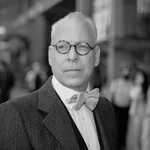
About Jeffrey Tucker
Jeffrey Tucker is the founder and president of the Brownstone Institute, established in 2021 as a response to COVID-19 policies. He's authored numerous books, including his latest, Spirits of America, inspired by Eric Sloan's The Spirit of '76. A prolific writer with 1,000+ articles, Tucker has been a leading voice against pandemic restrictions and institutional overreach. His work spans economics, technology, and individual liberty, with a focus on practical philosophy for modern life.
Transcript
Show full transcript
Jeffrey Tucker, welcome. My pleasure. Thank you. I appreciate you taking the time today. I absolutely want to touch on as much of your 30-plus years as we can today. That's a lot! I'm with you. I also have 30. You know, I think my bio may say over 25 to try to keep it from sounding too much. But I say that, you know, half-jokingly, your career has spanned writing, academia, dare I say activism, which we'll get into. You are a prolific writer, a thousand-plus articles, many books, the latest of which I absolutely want to dig into. And I say all that to indicate I think it's fair to say that you are a leading figure in Austrian economics and beyond.
And I know that that, as I have discovered it over the last five or six years, has informed a great deal of my worldview, I presume yours as well. So I paint that brief picture for listeners and watchers. Of course, we'll have details in the show notes. But with that brief background, I'd love to dive in here, and then I think we'll zoom out a bit and talk more. COVID-19, for those of us who discovered you in the last four or five years, as I did, it was largely based on your work, your actions in pushing back against COVID-19 policies. with the Brownstone Institute being, I think, the sort of seminal, the culmination rather of that work. So my question is this, how did you finding yourself perhaps or volunteering to lead much of that in America, how did that shape your perspective on the balance of individual freedoms
versus centralized authority, particularly in public health and economic systems? I never wanted to lead anything. I just was outraged when I saw what was happening. I had been writing about pandemic planning issues since about 2005 because I saw that there was a sector within government that imagined that the way to deal with infectious disease was by nationalizing everything and shutting down schools and churches. And I knew that there was a faction out there that believed that. I mean, George W. Bush had toyed with the idea because he lived in sort of constant fear of chemical biological attacks from abroad and had developed something like a central plan to – throughout the Bill of Rights. And I don't know what. These people are insane. And so I knew that this had been going on, and I knew that they were tempted by the idea in 2009 with the bird flu.
But everybody's too busy recovering from the 2008 financial crisis. You know, Washington can only do one thing at a time, one terrible thing at a time. So that kind of came and went. And then in January of 2020, when I saw this unfolding, when you hear the news media talk about this virus in China or whatever, I thought, you know, this is potentially a very dangerous situation because we had Trump as president at the time. And there was a kind of struggle between China and the U.S. anyway. And many people on what we call the right had this kind of wild fear of the CCP. The idea of the CCP manufacturing a dangerous virus, you know, to export to the U.S. sort of feeds into a bit of right-wing paranoia. And I worry that the Trump administration would somehow be open to an extreme solution here. This was in January. I wrote my first article about this. I think it was January 2020.
2020. And I said, you know, we could face lockdowns, extreme lockdowns, the effect of which would be to discredit the whole public health, destroy the country's health, and ruin all of our rights and liberties. And it would be many years to recover from it. And at the time, people called me up and said, that's the craziest thing I've ever heard. That'll never happen. And I assure people, look, I'm not saying it's going to happen. I'm just saying there's some people who believe that it should happen, and I'm worried that the conflict with the U.S. and China right now could lead that to being the result. Now, the fascinating thing about this is that it was China itself that scripted the lockdowns. I mean, that's what I can't get over. I mean, the World Health Organization and Anthony Fauci and the National Institute of Health flew over to Wuhan February 22nd on a junket, a commercially charted flight, to get a tour of how great the CCP had handled the virus by locking everybody in their homes, you know, by force.
And the World Health Organization delivered a report, I think, on the 25th of February that said, hey, China did this exactly right. Everybody came together and they defeated the virus through lockdowns and extreme controls. And we highly recommend that everybody follow the same thing. Well, that was the point at which Fauci got on board and said, OK, let's do this. At some point, they surrounded Trump and told him that he was responsible for millions of deaths unless he locked down the country. But don't worry about it because we've got a shot coming out, and it'll be out long before the election. And then you'll soar to re-election with everybody grateful for the great shot that you distributed. Hold the right strings. Yeah. And he – I'm not – I can't say – I've read every account of this. but most of them are lies, so I can't really figure out. I mean, I know for a fact that most of the accounts of this are lies because there was a lot of military intelligence involved,
so that means it's all classified, so you can't really see what's happening. But for whatever reason, they got to Trump, and three weeks later, he had lost. I think three weeks later, he realized he had been trolled already. But it took him a while to think through all the implications of what that meant. But anyway, I started speaking out on this whole thing, and I expected after a lifetime of – after a career-long involvement in what used to be called the liberty movement, that I'd be surrounded by friends and colleagues and that every civil libertarian on the left and right would rise up in opposition to lockdowns, but they just simply didn't. You got yourself with a back full of arrows instead. I, yeah, I was kind of a lone voice and I could not understand it. But it's like I didn't get the memo or something. There was a memo sent out to everybody else and they complied with it. Nobody ever sent me a memo. I did get phone calls. Angry phone calls. And what could you, I will try to avoid Jeffrey as best I can,
asking for wild speculation, but given, again, how deep you were and are in this matter, What is your best estimation of why that was so coordinated among those who might otherwise be assumed to be on the side of individual liberties? You know, there may be many other explanations besides this one, but my preference is just to chalk it up to ignorance about infectious disease. It's a complicated topic. Yes, it's always been with us. There's never been a time in history when there hasn't been infectious disease. It's always there. But the way we think about ideas and politics these days, it's not integrated enough. So you can be an economist, you know, and write, you know, 10 volumes of economic history and never touch on infectious disease, even though that's been a major subject throughout history. You can be— So deference to experts and expertise. Yeah. And so people just didn't understand. They were afraid of virology. I find this sort of aggressive posturing and ignorance to be insufferable.
I don't know why in January when we didn't hear this virus, why didn't people download viruses for dummies from Amazon and read it? They could have known immediately about the basic implications of things like natural immunity or the inherent boiled-in evolutionary tradeoff between prevalence and severity subject to latency. These are just basic principles of immunology that anybody would learn in middle school, at least in the old days. But it's like even geniuses. Didn't seem to know that. Fear hijacks the brain, and we know that. Maybe that's part of it, but I don't think people were intellectually prepared to deal with how to. It seemed to come out of the blue. There was a bit of a shock. Like, why would the whole of big tech and media and every agency of government and every government in the world be saying the same thing if it wasn't true? One is forgiven for leaning toward conspiracy theories in a situation like that.
Yeah, I don't – Because of that remarkable alignment, I think, that you mentioned. Yeah, yeah. No question about it. I mean, yeah, conspiracy. And the word conspiracy is etymologically just means that you're breathing together. So it doesn't mean that anybody sent out an instruction. It just meant you sort of know where your interests are. Like the big tech companies knew for sure. This is a great way to test. Jeffrey, I'm sorry. I'm going to pause you and I'll fix this in the edit. I think, I'm not sure if you touched your mic, but the volume level just dropped significantly. How about now? Coming up a little better. That's very strange. Yeah, and these are independent recordings on each side, so I can boost yours without affecting. Let me unplug and plug back in. Can you tilt it toward yourself, maybe? Okay. Ah, I think we're already better. There. Did that plug? That is up quite a bit. It looks like I just got a notification Jeffrey's recording will continue on a new track.
Okay, great. We'll fix that. No problem. That's strange. Okay, that's better. And I think if you could, and I'm sorry to be a director here, but if you could bring it closer to you, maybe we'll. Yeah, I'm a little puzzled by why we could be having this problem. It's now I now I've got a bit of echo, which is no problem. We can fix that. But the volume's up, which is great. So I'm sorry to to to break your stride there. Not at all. Not at all. Yeah. So let me just continue. You know, was there a conspiracy? Certainly. If by conspiracy, we mean breathing together. Big tech knew its its interests. The streaming platforms love to have people at home watching the movies. Amazon loved having, you know, trillions of dollars in cash dropped. Incentives were aligned. Yeah. And so it all kind of worked for everybody. CDC loved having new power. The Democrats loved having mail-in ballots. So, and mainly the mRNA industry wanted a chance to test out its product,
which is a kind of a platform technology that lead to a subscription model of profitability forever. So there is a lot of alignment here. And I just didn't – I just – my problem is I've never been good at following, you know, good career advice. I'm actually – everybody else – So when they said don't go wading into this battlefield, you said charge. They literally did say it. And by they, I mean the architect of pandemic planning from 2005 called my private cell phone and told me to shut up. This is not good for me. And, yeah, I had some arguments with him. You know, I just told him this is not going to work. And I explained why. And he explained why he thought it was going to work. But, no, I wasn't going to listen to that. Plus, I didn't – he told me that the plan was to stay locked down until we could get a shot.
I thought that was crazy that he couldn't possibly be telling me the truth because that would – I thought that that would mean – Two plus years, right, typically? In a case of a vaccine, it would have been closer to 10 or 15 years. That's what I know. You know, but also you cannot vaccinate against a respiratory virus with a zoonotic reservoir. It's just not possible. The mutation is just too fast. By the way, I'm saying this is not like fancy knowledge, right? This is just, this is known virology. These viruses mutate very quickly. You cannot vaccinate to get ahead of them. And if you attempt to do that, you're only going to incentivize quicker mutations. And ultimately leading to a breakdown of the immune system that's going to lead people to be sicker than they were before the shot. Guaranteed. I knew all of this in the spring. And here we are. Yeah. So, I mean, and also I didn't have some specialized knowledge. I knew this. This is just what you learn and what you can read about.
Just to check my knowledge, I read a first-year text on viruses from medical school, you know, which you can download online. I read the whole thing really carefully to make sure I wasn't missing something. So I knew this whole thing was ridiculous going into it. And I just couldn't stop speaking out about it. And, you know, it was also heartbreaking to see the world break. You could see people turning to drugs and liquor and depression and sadness and communities breaking apart. And the surveillance state was increasing and people were flying drones, turning in their neighbors for having house parties. And it was just a terrible situation. Twenty-somethings were walking around in the garb of woe, having found new cause in life, you know, like flagellants from the Middle Ages. And it was all just pathetic. Finally, I had the opportunity to gather some scientists together, and they put together the Great Branson Declaration, which I distributed. And that was right ahead of the shot release.
And that's why it was attacked so severely, because basically we said, look, we're going to get through this through natural immunity. And intimacy comes from exposure. That's the way every pandemic, flu pandemic ends. That's all the document said. Well, that apparently was unsable. These were insane times. They were crazy times. Anyway, you said, well, you know, what was it like to be a leader? I never wanted to be the leader of anything. It just so happened that within my sector of thinking, I seemed to be the only real voice out there that was consistently writing about the topic, as incredible as that seems. It is. It is. And with that, you have a background. You did the basic reading. Were you surprised by the degree to which this persisted and evolved and ultimately, to the point of this show at least, wrecked trust in these institutions? or perhaps would you have looked back and seen that this was inevitable?
Or were those – was the trust so frail already? So sort of where – you know, how cataclysmic an event was this in terms of public trust in these primary institutions? Yeah Well I wrote in 2005 that if the government ever tried this that it would destroy trust in government and public health and in science and medicine 20 years ago you were calling that out I said that 20 years ago I said if you ever attempt this thing the world will never be the same That said I could not have imagined the scale of it you know That was like an abstract statement. If this happens, then this will happen. But I could not imagine the scale of it. And the other thing I did not expect was to see such full-scale cooperation from all the media, all the big tech, all academia. I thought that academia had more dissonant intellectuals in it. I thought my movement, what I used to call my movement, the libertarians, would clearly see the problems and speak out against it. I thought all these things would happen.
So that shocked me. But I expected a state centralized response and a lot of resistance from the bottom up. What I did not expect is that every retail outlet, every big box franchise store would be celebrating because their smaller businesses were shut down, that the news media would defend everything and smear all opponents because they're all accepting advertising for the pharmaceutical companies, that CVS and Walgreens would take ivermectin and hydroxychloroquine out of the shelf out of deference to the medical industry, which is entirely in the pay. And that academia itself would shut up because the pharmaceutical companies are paying the journals and they're getting grants from NIH and NIH had to do X, Y, and Z. So the money flows were everywhere. Yes. What I would have called the state in the past was actually pervasive throughout all of society. then you add to that population panic, mortality fears, too much trust in the media.
That censorship, you know, even to this day, I don't know, you know, maybe there were a lot of people trying to speak out like I did, but they were censored. I was certainly censored. I was never finally blocked. Yeah, I got plenty of posts taken down, but I didn't finally lose my Facebook account or my X account. Where am I? Lake Tendik out. Quite surprising. They somehow survived. I don't know how. It's like a miracle. I'm reminded, and you probably know his work, you may know the man, Oren McIntyre, who I have become familiar with recently and watched an interview. And I was really, really struck by his remarks about what he calls the total state and the managerial class. and really synonyms of, I think, to your point, how what one would call the state is now much more expansive. It's everything. And I'll make this assertion and get your feedback on it, Jeffrey, is, you know, as one of those Bitcoiners,
we talk a lot about broken money and setting aside Bitcoin. I would assert that, to your point, they all fell in line because the money is broken. And therefore, the economy is broken and therefore, one not dare step out of line. What's your take on that? I think there's truth in that, but I need to flesh it out just a little bit. I mean, the managerial class. Managerial class is bloated beyond all sustainability in a genuine market society. Even in a normal society, you have millions upon millions of people that got their jobs solely because of their resumes and for their far-flung so-called credentials from fancy universities. They don't actually do anything. They don't know how to do anything. So how's it they're hired? Well, for the better part of 25 years now, 20 years up to the COVID thing, the large corporations have ballooned way beyond anything they ever would have because they had taken on so much leverage,
and they just started throwing human bodies at all problems. We need better marketing. Well, we need a marketing department. How many should we hire? It's 300 people. And this went on. And how did this happen? Because credit was so cheap. We experienced negative interest rates for, you know, two decades. And you know from structure of production theory that under those conditions, what you get is a wildly blown up, overblown capital goods sector that's living off leverage. And that's exactly what we saw. It distorted the markets. These large corporations started eating smaller people. People start businesses just to be acquired now. This is not normal. Yeah, that is broken money. But, yeah, so – and in 2008, when Ben Bernanke rescued, as they say, the economy from the financial world from collapse by zero interest rates and then had the Fed pay a higher rate of return on the reserves than the banks themselves could get in the private sector,
What that did was tamper down hot money in the streets and therefore inflation. But, yeah, which is great, except that it massively distorted the production structures. So, you know, Burnham wrote about the managerial class in something like 1945. But we had never seen the managerial class like what we encountered, you know, by the time COVID arrived. So you have this huge unskilled overclass that hates more than anything else their commutes. And they say, wait, stay home and stay safe. Oh, yeah, I'm going to stay home and stay safe. I'm thinking of your closing paragraph on forbearance. We'll come to that. Yeah, right. Yeah. And the other thing to remember is that people like me in that sort of classical liberal milieu dating way back have been very reluctant to think about class disinterrata as a sort of a relevant explanatory paradigm for understanding politics.
We just don't like to do that because it makes us feel like Marxists, okay? So it took me a while to realize, wow, we've got a class problem here. We've got a genuine class struggle taking place. The overclass versus the working class. The essentials and the non-essentials. That's what the government called everybody. So it was exactly as Marx explained. It was a genuine class conflict with the owners of capital exploiting the workers and peasants, except this time the workers and peasants are dropping off groceries at your front door. That is – the economy functioned exactly the way Marx explained it. And if you don't read Marx, you don't understand Marx, this becomes invisible to you. And that is a fantastic seg, Jeffrey, into my next question, which is if we take as understood that these massive institutions, the total state, has failed, in many measures and is failing. As I heard someone say today, a living thing retains its
form even as it decays. And so if we accept that it is decaying and that trust, particularly among millennials and younger, is almost non-existent in these institutions, we look to the free market. And that, however, is fraught with challenges as well because of these institutions largely. But my question is, what barriers do we face in addressing these public health and economic and bigger challenges with free market solutions? So what is the environment like now to make a shift to what a liberty-minded individual, to what a free market advocate would assert is the right way? I don't know. I'm reluctant to even use broad terms like, oh, the free market solutions, because I don't think we have any agreement. Or, I mean, you hear about privatization, it always turns out to be contracting out. A lot of the oppression we face right now is from private sector actors.
I could just go through all the lists, but I mean, the state is able. I was just at lunch, and the waitress says, don't you want to sign up for our loyalty program? You'll save $5 on your meal. I said, yeah, not today. But I began to think about it. What she's calling the loyalty program is actually just a data collection program. That's all they want. They just want your data, and there's nothing to prevent them from selling your data. And they sell it to the government. I mean, we're all being profiled every single second. Okay, is that the market working? I don't know. I mean, maybe not. Maybe, maybe not. But the regulation and the markets are so intertwined now. That is actually the single spookiest thing I learned during COVID. And I'm still not quite shaking it off. A lot of it, we knew for sure that the agencies were working hand in glove with industry. There was no conflict between the pharmaceutical industry and the CDC, you know, between the tech companies and the FCC.
I mean, between the media and the government. I mean, they were all cooperating very, very closely between the people. Lockstep. Lockstep. And it became very unclear to me at what point. And I've looked at this very carefully and disentangling those and saying, oh, these are the good actors and these are the bad actors. It's no longer possible. I'm not even sure which hand and which is the glove. So I take your point. So it is naive. And my question is somewhat designed that way. It's just like. But to say let's point more resources here when here is submerged in the greater, you know, sort of blob, as some would say. Yeah. Yeah, and I don't also entirely know what to do about the fact that you have, for example, the FDA giving, you know, rubber stamping, or the Department of Agriculture for that matter, rubber stamping deeply dangerous products for the market. Let me just give you one quick example of what I mean by that. Okay. So you had during this period, and I'm annoyed for the most part by libertarian naivety about the way the real world works, but during this period we had private companies mandating that their employees get the shots, okay?
And my liberty friends would say, well, that's a private company. They can do whatever they want. Okay. But here's the problem. These shots were in— Behest of OSHA. Yeah. Well, these shots were indemnified against any liability for harms, okay? So they can kill you, you and your family and your children. Everybody's dead. Nobody pays the price because the shots were indemnified by the government. So the employer is forcing products on people that can kill them and facing zero liability for this. This is not – no genuine civil, free, responsible economic order would ever permit such a thing. And just to be sure I understand, Jeffrey, I believe I knew this at one point but have since perhaps forgotten. The indemnification clearly was first and foremost for the pharmaceutical companies themselves.
So I hear you saying that it was specifically extended to private companies, to employers? Well, that's the way the courts are treated. Treated it. I mean, they've dismissed everything. You lack standing. Do these shots are indemnified? There's no—we're not accepting any claims of injury claims. Nobody's responsible for this. And there's several layers of indemnification. I mean, this is why they ended up putting the shot on the childhood schedule, right? Because once it goes on a childhood schedule, it's indemnified again. It was already indemnified with the emergency use authorization. That was only taken off yesterday. And then it was indemnified once the shot got added to the childhood schedule. So the shots are now free and clear. They can just do anything to you, and there's no consequence. So you're telling me that a free market allows private companies to do this? I don't think so. How does one fail in that situation as a company, right, as a pharmaceutical company? And then you had the Cato-Wenster going, oh, free enterprise. So, yeah, there you go.
So I'm really very unhappy about the performance of our free market intellectuals. So in lieu of that, and, you know, here's an easy question, where should we look? Yeah. Well, we need a new intellectual paradigm as far as I'm concerned. One that's empirical, scientific, focused on reality, but also driven by fundamental, intuitive, moral principles. And that's why I founded Brownstone was to explain that. And please tell us more about Brownstone. Well, I started Brownstone in light of those. I said this is this chaos and nobody seemed to figure it out. All the old institutions are corrupt. We need a new institution to figure this out and what to do about it. And people said, you can't start a think tank based on an infectious disease. That's going to go away, and then you won't have anything to do. Plus, I've not seen your five-year plan. I don't see a clear mission statement.
And my intuition the whole time was, yeah, I don't have a five-year plan. Eh, our mission statement's a little vague. Yeah, I know the pandemic will end, but I'm telling you these are new times, and we need a new way of thinking. We need new colleagues, a new emphasis, and new tactics. And a lot of it are based on the success of the Great Banshee Declaration. And here we are four years later, and I mean, Brownstone is rocking the world. Like last week, we had a massive tangle with one of the top pharmaceutical companies. And just to get down to a very granular level, we have several Brownstone associates that are associated with the Advisory Committee on Immunization Practices associated with CDC. They split. Some voted for the new RSV shot. Some voted against it. One of our fellows wrote an article saying, look, the documentation that the ACIP committee was given the day before the vote was fraught with problems.
They buried deaths in footnotes. They didn't pool the data. They split it arbitrarily in ways to bury the safety signals and statistical insignificance. Wrote this. And then other people piled on and piled on. And then finally, some guy I'd never heard of, a far-flung doctor in some remote clinic at Stanford University, writes a huge attack on all this work that came out of all places in Quillette, which I think used to be considered a right-wing publication. And when I read it, I said, well, you know, this is kind of compelling, and I'm not a scientist, so if I find it a little bit interesting, this response, maybe other people will also. Well, within 18 hours, not even that long, A epidemiologist in Israel named Yafashiraz wrote a response to it that was so devastating that it was definitely the kind of message that says, you know, come after Brownstone, F-A-F-O.
I mean, it was that devastating. That had to feel good in its own way? Yeah, right. But, you know, what other venue would do this? Right. the result was just dead silence And it a warning now For the first time in certainly 30 years maybe 100 years to all the pharmaceutical companies you not going to get away with your shit anymore You can't just lie with your statistics. You can't just get a broad brush called science and paint a veneer on your crap anymore. So we've now got some accountability. That's just one area we're doing. But we're doing all these other areas, bringing intellectual credibility to these vital issues of public life in the interest of restoring freedom and giving people their lives back. And I think that's the kind of hard work you can do, which involves more than sharing memes or just reading memes or listening to some blather on a podcast.
No, none taken. I guess. It is. This will not be the deepest treatment of the subject matter. No, but I'm just saying that we have to have—our experts have to outwit their experts. I think that's our strategy. That's our goal. And I do that not just to overthrow the state. I do that out of a matter of intellectual integrity and out of fealty and piety towards this idea of truth. That's what we have to regain. It's hard to put a finer point on it than that. If we look then as we kind of continue to drill in, Jeffrey, the total state markets, let's presume, you know, national markets here in the United States down to communities and individuals. Does your work or rather in what ways does your work in the work of the Brownstone Institute speak to communities and individuals? And what are the, for lack of a better term, the calls to action for communities and individuals, families to rebuild the trust in each other, if not these higher order institutions and markets?
Yeah. Well, I think what we have to do is exercise critical intelligence to understand all the ways in which we've been manipulated and the way our way of thinking has been distorted through these systems of power that have gradually crept into our lives. And I don't think the answer is the same for everybody, but my book, Spirits of America, goes as far as anything I've written to kind of deal with this problem, like recovering the old values. I think part of it involves learning how to unplug, you know, and get back patience and forbearance and find things to do with your hands. I mean, like, you can't let them do this to us anymore. And, yeah, I'd like to see taxes and regulations go down and, you know, the debt, the budget balanced and all these things. But ultimately, the repairs happen to have to take place within our own lives. And we've strayed so far from normalcy and from decency and civilized standards that, you know, it's got to start with each of us in our own lives.
And so a lot of my writing, when I write every day, Epoch Times, you know, comes down to this. Like, just think more carefully about. So one of the habits you get into in a highly commoditized commercial society is you think anything's for sale is good for you. and that any problem you have can be solved by something that's for sale. I mean, this has been going on for, you know, 150 years or something like that. Well, that may not be true. I mean, the things you're buying may be killing you, you know. Your problems may not be soluble through— Which is a rude awakening for many, many people. Shock. And understandably. Like taking responsibility. I mean, that's an amazing thing. And we're exercising critical intelligence. And I see this is starting to happen more and more. You know, in the old days, you know, every corporation thought they could just fob anything off on the population. People would blindly just buy it and forget about it. And there's an aspect of market ideology that sort of blesses that.
Like, just trust. Just trust the businesses. They'll take care of you, you know. Well, that's not true. I mean, and people are trying to get incredulous now even towards the large corporations. So I think it's a good thing. Like what just happened with Cracker Barrel? They tried to change their logo. Fascinating. Cracker Barrel logo is actually you're a consumer, you're sovereign, and you don't want to be using your dollars to support values that are against human life and against your own personal progress and thriving. And people are developing a real sophistication. They saw a change in the logo here as indicative of some rot at the heart of this company. And there was a, like, a revolt that ended up tanking the stock company and then reversing the decision. And my guess is that there's going to be a management of people there, too. So this is, to me, an example of people have power, right? But it's using your critical intelligence to examine the things that are around you all the time and not just trust because it's for sale and not just trust because it's coming from the government.
And with the loss of trust, you have to start getting incredulous towards everything. And I think this is a good thing, but it's going to require we take a different approach to life itself. We have to get out of our old habits. Our old habits led to the calamity of 2020 and following. And we can't ever do that again. So if we want to take back our lives, we really have to take them back. And that means taking charge of, you know, diet and exercise and health and mental acuity and, you know, education and our faiths and, you know, every aspect of it. Everything. And that is so poignant. And I, in conversations with individuals about why I'm doing this, why I started it, so often the point comes up that much of at least American society has been operating under a model whereby there is a trusted authority. And they will hand down or dictate to you that which you will, who you will trust.
And we salute. We go about our way. And to your point, just as the three R's, just as media critique and the ability to discern what is and what is not true, we must do the same thing with trust. I want to ask one more question, Jeffrey, before we get into the meat of this and discuss Spirits of America. To set the – to further set the table for that conversation, could you talk to us about your roots in Austrian economics and enlightenment ideals? And tell me how that informed your vision for this regeneration or reinvigoration of society that the book speaks to. Well, it just so happened that the tradition of economics that I found myself drawn to is rooted in a sort of Aristotelian scholastic tradition in continental Europe that very much is called Austrian economics because it's from Austria. But it differed very strongly from the German historical school, which is purely empirical and statist in its orientation, thinking that, you know, the job of an economist is always just to look at statistics.
the Austrian school believed that the job of an economist was to understand the relationship of cause and effect in the course of human affairs insofar as it impacted on the material world. And that was praxeology, human action. Yeah, well, praxeology is one aspect of it, but in McGarrett, it was like a strong emphasis on humane understandings of how society works and And a focus on cause and effect and logic, right? Not just empirics, but logic. And that tradition ends up being pretty darn fruitful, you know? And it gave birth to a 20th century, what was in the old days called liberalism, but really it was this sort of resistance against many different forms of totalitarianism. And you see this in the works of F.A. Hayek and Ludovic Mises, and my own mentor, Murray Rothbard, and Eugenbaum, but Barwick, who was a finance minister in Austria, and many, many. Gottfried Habeler, another one of my mentors,
one of my favorite thinkers, Joseph Schumpeter from Harvard, who moved over from Berlin, and actually University of Vienna. So lots of really interesting thinkers that were spent a better part of the century in a position of being dissidents against prevailing corruptions. And so, yeah, I threw myself into their works and learned a lot from them. There's still lots to learn from those guys, but all in preparation for—I now look back at it, and I had fun, you know, back in the old days when I was just writing about, you know, the problem with showerheads and, you know, things like this, you know, in the old days. Those were fun times, good times, the early days of the Internet. and celebrating, you know, progress and so on. But when the crisis hit in 2020, I felt like I had been well prepared with a good basis for understanding the world as it unfolded.
I did make some surprising things happen, though, after 2020. I'll just tell you very quickly. After the rise of national sort of populism, you know, with Trump, I began to get very concerned about right-wing forms of statism. And I wrote a book that came out in 2017 called Right-Wing Collectivism, The Other Threat to Liberty. And there's nothing really wrong with the book. But necessarily when you're covering just one topic in a book, you're overlooking other topics. So while I was concerned about the nationalism of the right and the statism of the right, you know, the left was growing into this horrible monstrosity. So much to my discredit, it shocked me how terrible the left proved to be on COVID. And then as time went on, the people that ended up being really strangely good on COVID were the very people that I had warned against six years earlier, you know, or even just three years earlier, really.
What was the hitch? What was the factor or factors it caused? The populists. So the good thing about populism that I don't think I fully understood when I wrote my book was that they distrust the elites. Right. And, boy, I tell you what. That alone. Yeah. In 2020, a distrust of elites took you a very, very long way. Indeed. Indeed. So God bless them, right? I mean, so I've—it's funny because next week— Even useful idiots are still useful. Well, it's just interesting. You know, so my allies and, you know, who's an ally and who's not, it's all shifting all over the place. It hasn't been for a long time. But I'm laughing because next week I'm going to speak at a conference called the National Conservative Conference. They invited me to speak, and it's led by this guy. Yaron Hazoni, who wrote a book called something like The Case for Nationalism.
And when I read this book, I was just outraged. Oh, there's no case for nationalism. It was terrible. And I reviewed it very bitterly. But he very sweetly wrote me. I said, well, you make some interesting points. I think you're wrong. But maybe we need to have a debate. And I said, OK, yeah, we can have a debate. But we never were able to put together a debate. We kept missing each other somehow. But I had somehow held him out to be my betonois in some way. But he keeps seeing my writings. He's like, you know, you're getting much better. Stick at this. You might make a career of it. Why don't you come to my conference? And I said, you know, okay. So I'm just going next to him. I mean, they know who I am, right? Yeah. No doubt. But at my core, I'm a theoretical, you know. anarchist of the classical school, you know, so anarchist of the classical school. That's a business card. Okay, Jeffrey, well, let's get into the book. And what I'd like to do before we do so
is, so the new book is Spirits of America, inspired by Eric Sloan's The Spirit of 76. Yeah, yeah. And in it, you reflect on liberty at the semi-quincentennial. As you note, it doesn't roll off the tongue, but it's important. And I want to run through the table of contents because I think this sets up the conversation. Beyond the opening, the preface and the meaning of the semi-quincentennial, we get into really, to me, a list of values, qualities. and I believe that which you are calling attention to as necessary to reinvigorate America and American society. So the spirit of respect, the spirit of work, the spirit of frugality, and it goes on, thankfulness, pioneering, godliness, agronomy, time, independence, awareness, enterprise, physicality, localism, and forbearance. So would you summarize, Jeffrey,
why you felt called to write it and who the audience is and really what you hope they will take from it. Yeah, yeah, yeah. These are all very touching, meaningful questions to me. The book means a lot to me. And I know this because it's the first book, and I've written like 20, okay? But every time I write a book, I just put it on the shelf. I don't care about it. This one, I keep rereading again and again. And the one thing is very short. and I commissioned 15 pen and ink drawings to go with each chapter. And my prose style, I deliberately, I wanted it to be as raw and as truthful as I possibly could. So the sentences are short. I don't do a lot of razzle-dazzle. I don't show off fancy things. You know, oh, here's Hegel, here's Schumpeter. You know, I don't do any of that. It's all just like gritty. Very direct. Real life stuff. And it was meant to be read. And I'm glad to say that so far on Amazon, you know, everybody loves it. So I'm thrilled by it.
But what happened to me, you know, we've all been living in this chaotic time. It's like, what the hell happened to us? What's true? What life changes did I end up making? What have I forgotten? You know, how come this happened and I didn't anticipate it, right? And so somebody pressed into my hand this Eric Sloan book, and I thought, this is, I read it. And I thought, this book is amazing. It just introduced me into a completely different way of thinking about the world. Because this is a book that celebrates pioneering and tools. Published in 73. 73. But he's a historian, right, of an history. So he's mostly writing about 18th and 19th century America, about the values and the difficulties and struggles that come with entering into a barren land. And finding a home, building a home, planting crops, making tools, raising families, building up communities.
And what are the habits and mores and values that are associated with that? Because that's what we need, you know. And when I read the book, it was just one of those moments where I thought, my God. I think part of me have previously believed that if you have a market, whatever that means everything takes care of itself Right We can just then float around in happiness and stream music and buy a tech call Perfect information of pricing in a market and all the following. Just make sure your iPhone's up to date and, you know, live school. And so after me, it's slow, and I thought, my God, I have neglected so much. There's a huge world out there that I've been invited to completely overlook. So struck by this, and then realizing that Derek Sloan Foundation would not put this book back in print ever and that there were very few copies remaining. Now, if you try to get one, it's $4,000 at the last price. I did take a look, and I was amazed.
You can get his other books, and all of his books are great, but this one was sort of banned by the family. Interesting. Yeah, but so I decided, well, look, I'm going to rewrite this myself. and I rewrote it thematically, but there's no duplication of content. I took his lessons and then riffed on it. A lot of it is autobiographical, right? As you notice. Just stories from one life. Here's the thing. In the age of AI, AI can do all this automatic thinking out there. It can regurgitate what's known and blah, blah, blah, blah, blah. Yay, it's very impressive. But the one thing AI cannot do is replicate experiences in your own life. And so I tried, I more than anything else wanted this book to be true. Okay? That doesn't mean I'm a dispenser of truth. It means that I wanted to struggle as hard as I possibly could to get as close to a conception of truth that I felt confident in. So I could rally around this book and say, this is what I currently believe.
put aside all the razzle-dazzle, all the careerism, fear of what other people are going to think. Let's just throw all that crap out and just get down to the raw core of things. And that's what I did. I wrote it in one day, okay? So I'm not going to be shy about that. I'll just tell you that I woke up one morning and by the night I was finished. So it's just one stream, you know. 96 pages in a day. To those of us that are not writers, that seems indistinguishable from magic. Well, it wrote itself, really. And I trusted my first intuitions, really. And the fact that I wrote it in such a short period of time means that it's fairly integrated. Yes. One chapter easily flows to the next. And I resist making some grand conclusion. And I broke it down that way partially because I reflected somewhat the structure of Sloan's own book, but added in my own chapters, right?
I think I had forbearance and physicality, and I think those I added in there, just because I had the opportunity to do that. The other thing is that Sloan, I think by 1973, was deeply depressed. And so by the end of his book, he's like, you could see he wrote it on contract. You could see he could barely finish it. And he was despairing by the end. God, this shitty world. Maybe that's why it's not on the market, huh? Yeah, maybe. The reason it's not on the market is the chapter on work where he just thinks that everybody just needs to work all the time. He's like, you need a job. A human being is not meant to be languishing forever in leisure doing nothing. We're supposed to have tasks ahead of us. We're supposed to accomplish them with joy and not regret. And as you called that, I believe that work and life are inseparable. Yeah. Yeah. So it's unbelievable that. And, you know, let me just quickly back up side.
So there's a chapter in here where he talks about the problem of regretting toil, right? And he said, look around. And this is 1973. Everybody's trying to find some way to get out of doing something. And every advertisement tells you how terrible your life is. So get this product and that'll make it shorter, save time. You don't need to have a dinner. You just, you know, eat on the run. Here's your fast food. You know, hold a sandwich in one hand, drive it the other. That way you can do two things. As they say, you can sell vitamins or painkillers and painkillers sell better. That's right. So I began to think, my God, that is true. We have an economy all configured around the idea that I hate my life. And so everything you do, you hate. You don't mind eating, but you hate cleaning up. You don't mind sleeping, but you hate making your bed. You don't mind having things. We get mad when they break.
It's like how much of your day is filled with things that you're being told are terrible? And why we hate them so much, we want to make them last as short as possible. We acquire tools and tools and tools and tools and gizmos and things so we can reduce the amount of time we have to spend doing this thing that we hate so that we can go on to the next thing that we're encouraged to hate. And then we hate that so we get a tool to make that as short so we can go on to the next thing that we hate. At what point do you start loving life? And so one of the messages that Sloan says in there is that you need to start finding joy in routine. Not always looking for dopamine, but find joy in routine. And it seems like a simple thing. But after I read that, I thought, you know, that's right. I've had a pile of dirty dishes over there for three days. And why don't I go there and lovingly clean it with precision? And don't put them away wet, but try them carefully. And once I changed my mind about this is stupid, but once I began to change my mind, okay, there's a pan to clean.
You know, I could clean that thing up a little bit too. And there's a spot in the refrigerator. Why am I letting that sit there? And I began to kind of think, I can find joy in doing things that I previously thought were a big pain in the neck. And it was a mental shift. And it happened all in one day. And I began to notice this is true for everything. Why haven't I taken that trash out? How come those empty balls have been sitting there for two weeks? And I started looking at myself as being blessed with two hands and a brain and an opportunity to at least make my little space. But I'm not just talking about cleaning the house. I'm talking about, like, everything. Why do we curse when we have to go to a store? Oh, damn it, we're out of toilet paper again. Why are you saying, why, damn it, we're out of toilet paper? That's just like you have an opportunity to do something. Just do it. Just shut the fuck up. Right? Absolutely. I mean, and it's, you know, and I think I am struck by this in the sense that from the Protestant work ethic to Buddhist practice, right?
Buddhist practice, when I sweep the floor, I sweep the floor. When I wash the dishes, I wash the dishes. It is mindfulness. It is meditation. To Stoics. You take pride in that. Yes. And that's why I was reflecting on the life of the farmer. You know, I had one experience in my life with a farmer. And it sticks with me because we got up very early, 4 a.m. or whatever. But we went out, and most of the time was fixing things. And I remember being struck by the fact that he was never upset that the fence was broke, that the nail was rusty, that the wood didn't fit, that the horse was being a pain in the neck, that the pig got out. He was not upset by that. He was like, this is my job. This is what I do. He was patient. He never rushed to anything. He's just very patient. We have to cut a new piece of wood. Oh, the saw is broken. Oh, the saw needs a new thing. Let's get a new thing in there. Fix this thing. It needs some oil. And now, oh, the oil can's empty. Have to get some oil. And this is what he does. He's very calm about it, right? Like, how can you be so calm?
Everything is broken around here. Yes! How can he do it? Nothing works, right? How can you be so calm? Why aren't you angry? Like the rest of us, right? Yes, yes. How dare you be at peace? Well, he was happy. He was happy. And I remember sitting at, I guess it was dinner time, what they call supper on the farm. Because you had a huge breakfast, then a tiny, then a sandwich for lunch, and then you just have soup or something for dinner, you know. And we were sitting at soup, and he said, huh. He got up, he looked out the back and saw somebody moving. He goes over the wall, grabs his gun, opens the window, and blasts this thing with his gun. He does the same, puts it back on the wall and sits down. I said, I'm sorry, what just happened? Well, there's a varmint out there. Do what you got to do. And I tell you, Jeffrey, when I was reading your book, which I really, truly enjoyed, and it did speak to me in its coherence. And it's the kind of book, I don't want to give fluffy praise, but I think it is a book that I will and others will return to time and time again.
What kept coming to me were my grandparents. And so, you know, at the risk of some personal information, my parents did their best. My grandparents, as I have said to so many, my wife most of all, the man I am flows predominantly from my grandfathers and from my grandmothers. And my grandfathers both fought in World War II. That is shorthand for many things. but I learned so much. And as is the case, I suppose, for a human being, it is only when you're older that you look back and realize the importance of some of the lessons that were somehow embedded within you, but you didn't really give enough attention to. And so I think in reading Spirits of America, I was reminded of so much of that. And I'm somewhat embarrassed often in personal conversations to admit, as you mentioned earlier, how much
I have either forgotten or simply didn't put into focus enough to learn until later in life. And I think that, you know, this book, I believe for those who are so gifted as to know all those things already, it will emphasize and strengthen. And for those of us who are still very much learning, I think it paints a picture, as I say, for what I believe are the kinds of things that we need to reinvigorate, ultimately, trust in one another, in our communities, in our families, in ourselves, and not to put too grand or fine a point on it. But that really is what I take from it and what I want to emphasize. And so as we wrap up, Jeffrey, I'd love to conclude with this. when individuals ultimately, I hope, are inspired by this conversation and others in the show to
reinvestigate, reexamine personal freedom and what it means to them. What would you call out among the, let's see, 12? I'm skimming without numbers here, the 12-plus chapters, you know, what do you think are the real core lessons from either the book or that you would want to convey otherwise about reclaiming personal freedom in light of these institutions sort of run amok and having lost our trust? Yeah, there's just so much in the book that is deeply personal and every chapter means something. I think more than anything else, we need to reclaim our freedom by first reclaiming our time and the use of our time, the use of our personal space, and reclaim our brains from those people who have stolen them from us.
And you need to realize all the ways in which that's happening. before you can really do that. You know, how many conversations have you had recently that have been interrupted because the person got a text and they're checking it? And what that person is really saying is, Mr. Internet over here is much more important than you are. And that's dehumanizing. It's dehumanizing to the person with whom you're speaking to do that. So how do we deal with that? And I'm trying to get better at this myself, just saying, hey, listen, if we're going to be here talking, it would be best if we just talk with each other. Like, I need to care what you're saying and you need to care what I am saying. So maybe just pull the thing away. Or the most annoying thing to me in the world is when you're having a nice conversation and there's a question about, and they pull it out and ask, you know, Chad GPT. And you've lost them. Yeah, it's like, I'm sorry, are we not allowed to think anymore?
I mean, can we just, well, who's this uninvited guest? you know, here, are we just going to turn over the whole of our brains and our thinking and thought processes, our relationships, the conversations to technology? I don't think this is good. At least we should at least be aware of what we're doing before we do that. So I've made a habit, and I have to say, I think this is essential for freedom. I've made a habit, a daily habit of putting my phone in the drawer, shutting down my computer, and I take a walk. and I listen to birds and I look around at trees and I look at the flow of water and I breathe fresh air and I try to empty my brain out. And this is not foo-foo meditation shit or whatever. It's a revolutionary act. Yeah, it's just a matter of kind of resetting yourself so that we start living in the real world again instead of the artificial world to be created for us by people we don't control.
You know, I think this is really essential. And I think the book inspires you to this sort of these kinds of changes that everybody can make. It's not a self-help manual. It really is a reflection on fundamental human values that have been forgotten. And we need more to aspire to. And again, I don't want to, you know. And that's the chapter on pioneering is really important here, too, because you need to. We don't have lands to travel. My ancestors went on a stagecoach from Massachusetts down to Texas, you know, in 1830. Okay, I tell that story. It's very impressive. And we don't do that anymore. But we can treat our own intellectual lives and our personal relationships as an adventure, you know, as a pioneering adventure of discovery. and to be humble, to be truthful, to not be duplicitous or disingenuous,
but have a genuine attitude of adventure and discovery and excitement about life. That's what we really need to reclaim. This culture of regret and complaint that we're invited to adopt as our mentality is not getting us anywhere. We need to start loving the world that we can control, become masters of our own domain ourselves, which starts with our homes and our families and our friendships and our own communities. Master that without any mediation, just us with individuals. And that's the beginning, I think, of outsmarting the technocrats and trying to steal our property, our lives, our liberty, our spirit. Perfect ending. Jeffrey, thank you so much for your time and insights today. I will look forward to sharing this wide, and we'll get out all the information about this and your latest and other books. Thank you so much. Right. My pleasure. Thank you.