The future is peer-to-peer
How do you stop a population that has financial and communication independence?
— Mathias Buus
Timestamps
Resources
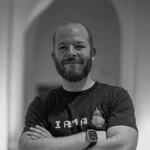
About Mathias Buus
Mathias Buus is CEO of Holepunch, a Copenhagen-based JavaScript developer who has published over 1,000 NPM modules with billions of downloads. Creator of Pear Runtime, Hypercore, and Keet, he organized the 2025 P2P Summit to rally developers against Big Tech's grip. His mission: empower individuals with trustless, decentralized systems.
Transcript
Show full transcript
Yes, welcome. Hey, thanks for having me. Appreciate you taking the time. So perhaps a question you are tired of or delighted by is, is I found, I found a Matthias Bus on a website claiming a number five position in a Rubik's cube competition in 2008. Is that you? No, that's not me. Oh, okay. Okay. That's a good guess. Yeah, yeah. There was a hyphen. Yeah. That's good, though. I can see how all the signals are aligning. On the name, right? Yeah, yeah. Well, so, you know, okay, so you're not a Rubik's Cube master, but you have for measure contributed roughly 1,000 NPM modules. That was you, right? Yeah. Okay. I learned to – so it's actually funny you mention that because I think about this a lot. I, so I, um, um, I came up through like, uh, you know, went to school and all this stuff.
And I went, I studied math at university. And one of the things that was very, very, I always think about the set the stage for my career was like this, the humbling, I would call it. Uh, so, so like, uh, when you were like study something like math, where there's like an appeal for a very certain amount of people, um, you come in, you're like, maybe I like playing chess. Maybe I'm good at chess. Maybe I like doing the rubric scoops. And then you just meet these people who are like twice as good, five times as good, 10 times as good, 100 times as good. And you just realize, wow, okay, I can never compete with that. So I got to compete with something else. And then you learn how to maybe navigate how other things work. Shift lanes. Yeah. And I often think about that when you have an experience like that, you can either become like a person who's like resentful from that or you can kind of like learn from that and grow into something else. And I like to think that I did the latter part. Maybe I am resentful. Well, you know, and I misattribute this, so I won't try.
But someone wise said, you know, that you should continue to sort of niche down until you become the best in the world at what you're doing, which, you know, looks good in a coffee mug. It's a little harder in practice. But I think – and, you know, the reason I mentioned the 1,000 MPM modules, and for those who do not know, Node.js is a, let's just say, at a high level, an application development framework. And the bottom line is, Matthias, you have contributed a just astounding amount of open source code. And so I point that out and I sort of raise that as a sense of what drives you. And I won't presume to speak for you, but, of course, we're going to talk about hole punch and other work. But, you know, let's start here. Like what has been the through line so far in, you know, from let's say from studying mathematics to work where you are now, in essence, trying to sort of rip the centralization out of major, you know, applications that we use every day? Like what drives that?
that's a super good question i think uh in general i'm very driven by the power of the individual i think i think that's like a lot of people in in our space are like that and what i mean by that is actually just very egotistically what can i do as a person myself to make an impact on my surroundings uh and like um when i went to school i actually i didn't know programming um and i only had like done a bit of mathematics and stuff and was very interested in that and And part through the school, we got introduced to that because they wanted us to have a job afterwards. And it was like a requirement. That was one of the first times I kind of like got the sense of like, like I said, the power of the individual where, wow, I can just, I can learn something. I can write, I can become pretty good at writing some code as most people can. And I can just publish that online and you can take it and you don't even have to talk to me and you can run that code. and now you can use that to do something else and contribute back and we can kind of snowball from there and we don't need to involve any kind of like organization we don't need to have any kind
of funding we can just kind of do this on our own time obviously with like limitations and stuff like that but it's this like unhinged uh productivity and like uh creativity that that unlocks immediately spoke to me because i just felt like wow i can just it's just like the more i put in the more i it out so right so uh it was actually somehow a very quick path from like writing like one module to like writing a thousand because it's just kind of like going like that uh and it's like self-triggering you know so um so i'm a big believer in just doing things uh and um software for me obviously that's all the feels but software for me yeah i mean if one is if one is going to have a compulsion i can't i have kid this is a great compulsion you know and i i mean i i got my first computer at age eight, way before the internet. But every time I speak with someone who does what you do professionally, who writes code, who engineers software, who builds systems, I am reminded of, you know, and I think you say half tongue in cheek that it's egotistical,
but that just surge of power that you are godlike in your command of this machine, you know, and the machine that used to sit on our desks has now become, you know, the internet and a global system. I, I was, you know, I was talking to some friends and, and I got a, I got a humble PR merged into Omarchy. I can't, DHH's new, you know, which I'm running. It's great. And again, not a, not a developer, you know, not a professional developer, but to do something like that at that level is just joy, you know? And so for me, a novice, a hobbyist to do that, much less, you know, someone who's, you know, it's that classic image of the entire global internet infrastructure in that one little module, you know. And so you got a thousand X chance to be that one module. Well, so with that, let's shift Matthias in to hole punch, Pear, Keat.
And talk us through the order of events that led to taking on what now is hole punch and the associated technologies. Yeah, and I think actually it's funny. We didn't discuss this before, but it's a very good lead up into that. Because I think, so just from an experience of like being an open source developer, like you said, just, you know, you can command your machine, you can just produce code. the biggest hurdle i ever experienced and that as a person who was just like very curious and just wanted to make a lot of things was actually like it was actually really easy to write code but making products and making applications and making services although not insanely hard had a whole different entry level of of of problems like it's kind of like i don't have i couldn't make a thousand products because every time i would be like i have to like set up some infrastructure infrastructure and like if that infrastructure gets a lot of traction it might be a problem so
i wouldn't just like host files online because i would i did that once and i got like a big bill right like everybody just tried to do things to say nothing of ui ux and all the attendant sort of capital p product sorts of challenges and i had and i had this experience with open source which i think was very very interesting where like you would just write stuff and a lot of it would get like no traction so you provide something and you'll be like wow this is really good and get no traction and then that weird thing that you'd ever thought would really go anywhere would all so i can just take off and um that always stuck to me of like this like if you just produce you know a thousand things just like math right like one percent of them are popular that's like that's like a lot of them and um but i never got that stuff with like the products um and i'm not a very good product guy and you know like that's a lot of people are good at that so i need that i need the numbers game right um and at the same time i got very um uh interested of the same reason and just classic peer-to-peer back then. So one of the open source modules I wrote was a BitTorrent client, which I'm sure a lot of your viewers are familiar with,
which is like, you know, protocol for exchanging files between each other. That was very, very big in the early 2000s. Highly resilient. Highly resilient. And this was like around the peak of that, that I started to dabble in that. And it gave me that kick again of like, I could just use my laptop and I could just write software and interact with this network. It was not easy, but it also wasn't insanely hard. And I could just access this whole network of content out there and I could make these crazy novel applications. I actually, I think I made like a hundred different small things. So it was just like doing weird stuff with this network. And a lot of it took off, right? To get very popular. And all of a sudden I had this connect up like, wow, I can not only just write code, I can also actually provide content, like add that second layer and once you have operational like code and you have content you basically have a product like you still have some ui and stuff but like at least now like the two biggest parts of that is solved and so i would do that i got very triggered by that i did a lot of
stuff and it always came back to me of like it's kind of sad that i can actually only make apps right now to interact with bittern and back then bittern was honestly just used for piracy so it's kind of like every app you did unless you wanted to play that game would never really go anywhere so it would be like a piracy app and I was always like wow well this has way more strength in other spaces also so we can do this everything so I got very very interested in trying to take these protocols and apply them for like generalized networks so like how can we instead of just exchanging big files how can we do this to exchange any kind of data and that's hyper core that's hyper core that's one of the things i wrote again like just one of those thousand monitors just crank them out and um it basically set me down of this path of like okay we need to do some r&d we need to figure some stuff out i need to talk to a bunch of again smart people the rubix cube people yeah right right right speed runners speed runners get a lot of uh
outside help um but like build up a series of technology technological capabilities so we can start taking those kind of data networks, fuse them into apps and just have basically a platform of series and modules where we can make tons of them with no cost, with just like this iteration speed. And by that, let me ask Matias, I take you to mean, and again, for those who may not be builders or developers themselves, as you noted, if you're going to spin up an open source module, some code, let's just sort of generalize this and put it on GitHub, put it on the internet, Let, let, let, you know, others do what they will with it. That's one thing. To create a product, to spin up a product means, you know, potentially thousands of dollars in cost on AWS or some other provider. So the point is you've got all this infrastructure cost. You know, you, you don't, you don't build a home without a, without a foundation and you don't build a product without a foundation as well. And so if I hear you correctly, the itch to scratch was how do I remove that condition of the foundation, the infrastructure, and just rapidly deploy these useful, interesting applications?
Is that fair? Exactly. And not even just useful, but also just like crazy, like just like lift field ideas and like just try to do something really different. Right. Right. And it's very interesting what cost means also, I think, because for me, you know, it wasn't that, you know, paying $5 for something was expensive, but it's that thing of like, everybody knows this when they go to a website and they ask for $5 to do something. You're like, the transactional aspect of that is just immediately kills things because it's like this weird hurdle. And also like, it's $5 now. What if I have a thousand users? Maybe it's like $10,000, et cetera, et cetera. so getting that out of the way all of a sudden meant that we could start building these apps and not think about it and i think um that's what i was really really interested in from a technical point now i've been very very blessed in my career because it's actually a very very hard pitch to go to somebody and say like hey let's build something where we take away the transactional aspect of it but we allow people to build kind of like yeah and we monetize this how
right yeah which it was the same it's the same as you try to get funding for open source stuff back then at least it would be like yeah uh i don't understand and um so i was very lucky in my career to meet like the right people to help with that like aka tether and and uh and the crowd there who was big mind shares of that vision because there's tons of ways to to monetize these things but like not in a traditional aspect like that um so like basically build out the technology build a platform try to make this again comprehensible for normal people as you can see i'm i get very excited talking about it and like that's great technical aspects but like um turn it into something like normal people can build on and then um just have people build build build build and like just try out a thousand things i think one of the biggest sparks for somebody trying to do like an iteration phase of like building products and building things is like you get that one first user right and you get the two users and you get the 10 users and like that interaction thing is just motivating like anything else uh and that's that's what
building these things is all about especially for other people so that's awesome it's been that's basically what we're trying to do at whole punch just yeah yeah and it's early you're you're now three years in is that right matthias yeah three or four years and we've been working on the technology for longer because it's just been, you know, crazy. Sure. And I would imagine, as you noted, there are some strata, some layers that have been building over time. Well, let me ask this. If we zoom out, and I don't want to map this on to your motivations, but I do want to ask. I mean, we all know centralized platforms, Meta, Google X, they dominate our lives, our digital lives. They control data. They censor content at will. And ultimately, I would argue they're eroding user sovereignty. I mean, I'm sure you saw that Google has now announced that even to sideload an application on Android, you must, you know, to basically play on Android, you must KYC as a developer. And so my question is, be it the origin or now, sort of what fundamental flaws in this
gatekeeper walled garden model, are you targeting with hole punches, P2P tech? And, you know, how do they pave the way for a more trustless decentralized internet? Big questions, but I think they're important ones. I think it's super true. And I think also there's like multiple aspects of that. Like obviously there's like an aspect that's technology and like how we can make the technology that allows people to do this, which is basically what I talked about. There's obviously also a non-technical side of this, which is like just and i actually wonder about this a lot myself like how did we let it get to this um i feel like absolutely i feel like we had a obviously a huge revolution with with mobile devices yes and yet and yet we pay for them and yet somehow we still don really own them don own them absolutely um and we just somehow accept that uh because you know it almost a little bit too late on that i mean we still need to fight back but but we're in a we're in a like we're very deep in that thing now and um and it's a disaster and we need to we need to think of ways
to to to get out of that and like obviously peer-to-peer tech is part of that but it's also like just a pgp mentality outside that is a part of it you mentioned like omar key earlier like that kind of like movement on desktop computers about owning hardware i think that's really important i wish we can get like a and it's going to happen like a similar kind of revolution going on on mobile devices this will be the year of the linux desktop yeah i mean like it's it's pretty good but um at least like you know i'm still somewhat concerned and surprised that i can still install stuff in my you know i have a macbook right i I feel like because the way things are going on mobile devices, they're just locking it down more and more. Absolutely. And you have to assume it's coming, right, for most devices. I think the only reason it's not here is because they only care about the market share on phones because it's like 90%, right? Absolutely. So that concerns me a lot. And that's something also we're concerned about internally and also like building up alternatives for. And again, technology is going to be a big part of that, but it's not the end-all solution. Right. And so with that, do you mean to say, would Whole Punch and partners take on awareness education?
Like, does the mission expand to include that? Or are you just rightly saying that absolutely that is necessary? I mean, we are always trying to look ahead and see what's coming. And like also both are like, should we make more hardware or should we do other stuff? Right. Right. And because it's just from a personal point of view, it frustrates me dearly that the phone is the ultimate device. Yes. I have it. It has a radio. It's always connected. Yet I can't run software in the background on my phone. It's the ultimate peer-to-peer device, but it's also the hardest one to develop for because of restrictions that is forced upon me. So it's something we're continuously thinking about and trying to do stuff for and also both for end users. I think right now it's interesting you mentioned, again, like Omarki, because I don't even know, even as a slightly technical person, as a technical person, I don't even know. It's like my options on phones right now is very limited. I can maybe try to flash an Android device, but it's tough, right?
Yeah. So even for us, people who are willing to invest it, it's too hard and we need to do more stuff to make it easier. Now, if we had phones that were more permissive and stuff like that, you still need peer-to-peer to deliver software because, again, any kind of centralized store is going to go through the same kind of process that everything else centralized goes through with restrictions and liabilities and et cetera, et cetera. So it's absolutely cornerstone technology-wise that these things are peer-to-peer. But, again, there's a hardware aspect here that's really important also. Yes, yes. I mean, you know, those who know me are probably ready for me to shut up about my move from 2007, my first iPhone, to two months ago, a Pixel running Graphene OS. You know, I won't stop talking about it. And it is a lift. I mean, you know, for someone technical, it is tricky. But to your point, I had forgotten that, you know, I mean, I say this half joking. I had almost forgotten this is a computer. And I ought to be able to run background processes.
It will, you know, and again, for those non-nerds, you know, just means run the code that I want the way I want. And to open that, to unlock that, you know, and I've been using Keats since shortly after launch, you know, incredibly effective. I mean, I swapped out for Zoom calls some time ago. And so, you know, now, I guess the point is the performance of that and any application can be throttled, can be hindered by Android, iOS. And I think I appreciate, tell me if you disagree, that presumably that began in the interest of having or delivering a better experience to the consumers so that you don't sort of, you know, bork your own device and have a bad experience. But ultimately, it has just become more and more restrictive. And so, well, let me ask this then. So let's zoom in a bit. The pair runtime, this P2P, peer-to-peer architecture, how does it affect assumptions about trust as compared to centralized cloud platforms?
And so, again, for those who just know, you know, they access a website, they download or run an application. I think most of us know there's something back there somewhere. And as the saying goes, the cloud is just someone else's computer. And so the operative question these days is whose. So help us understand sort of fundamentally the shift from what ages ago was client server and now it's client cloud, you know, to peer-to-peer. What does that really mean? Yes, very good question. And obviously really important. I think it's, like you said, it's about just following the journey, right? like a lot of applications today, especially on desktop, I'll talk about desktop because it's a little bit easier to understand, I think. But it's the same on mobile. You open a web browser, you type something in. It's actually the decentralization starts immediately there because you type in some sort of name. So you go to google.com or something. So there's like a centralized registry where, you know, that gets resolved into some series of servers.
And as I remember from my working back with like BitTorrent back then, And that's how they tried to take down the Torrent networks first. Absolutely. Let's get them delisted. Let's get them delisted. And it was very effective. Other things would pop up, but it's like first point of attack for both censorship and also just like you don't really have any control. Now, the next problem is like if you connect to something there, like where is that stuff hosted? And like you said, nobody hosts anything anymore. It's all like big data centers. and those data centers are often like concentrated and big data centers but also like in in in jurisdictions you might not have any rights in so i think about this a lot i'm a person from a small country i'm from denmark with five million people um the amount of foreign data centers i use to do like my normal things um online is is crazy and and as a small nation that has no army and stuff like that like we basically have when at the end of the day very few rights as citizens
because like we're in the system of like centralization so when you access government services and stuff like that in a small country like it's very often it's interesting to think about like what does that actually mean it's like it's kind of crazy we take all our sensitive stuff and we put it somewhere else and right is it viable to move those things back hard to say because it's like that infrastructure doesn't exist. But is it Denmark? Sorry, Matthias. Is it Denmark, by the way, that is in this process or at least stating that they intend to move away from Microsoft, Microsoft Cloud Services? They're trying to repatriate, to your point? Yeah, and they've been trying to do that for many years. And like, because it's like, it's just very, very hard because of the scale of economics, right? It's like, can you make a data center yourself as a small country? Do you have that expertise when you're a few million people? maybe you get lucky and you do maybe you don't but the point i'm trying to get is like this is like a problem we've created for ourselves because basically we have the technology to to make all
this stuff self-hosted through p2p networks through other ways of like saying well instead of caring where the data lives let's just care about how we authenticate the data so like like if i go to a website i don't think i really care about it's like that the person i'm getting the data from is like cryptographically signed this data. So I can like put to normal people that I can verify that this data is correct. Yes. That I can verify that it's encrypted, like that, you know, there's nobody listening to it, but where it's hosted and stuff like that is really, really not important. It's just kind of like this arbitrary constraint we put for ourselves. And I think, and I would just inject one more thing, which is, you know, speaking of Switzerland and I'm a, I'm a big advocate of and customer Proton. I know that they are considering moving their hosting, their systems rather, out of Switzerland for concerns over data privacy protections. And so, you know, I think it might, if you would, in this sort of speak to how Pair, how P2P, you know, kind of obviates or addresses to your point the question of jurisdiction.
And I think for those, again, who may not be following this as closely, it's gone beyond, you know, what device do I run? What app store do I use? What reliable sort of back end is powering the application to in what jurisdiction does my data sit at rest? And what protections or lack thereof do I enjoy as a result? You know, all back to trust, all back to who can I trust? And so, you know, let's go to sort of P2P tackling all these things. So P2P actually is kind of like, this is what I always tell people, it's just like, it's actually just the simplest way of doing it. So instead of you have a third party having your data, I have my data, you have your data. And when we're talking to each other, we're just talking directly. You can make more complicated networks like that, adding more people and stuff. But like at the end of the day, that's what it's about. I'm tempted to make the Protestant versus Catholic. you know there's an there's an intermediary or you're talking direct so yeah i'm gonna i'll get in trouble for that one but maybe both are somewhat centralized through the big guy upstairs but but
but uh touche touche but uh but um yeah um and i find peer to peer very interesting in that because it's kind of like this attack by the masses where it's like every jurisdiction i want so it's no jurisdiction it's like right data is everywhere and nowhere i always say um and that obviously creates a bunch of challenges but that's what we're trying to solve with our um technology of like that shouldn't never bubble up to the user just kind of like i always say it's kind of like when you make a centralized network you don't really as a developer think about like things like packet drop that's like the technology handles that kind of like pretty pure you don't really think about where data is the technology handles that right um but it gives you this much stronger foundation where it's just the people on and their devices and their hard drives in their networks. Obviously, you can have, you know, if the government in Denmark wanted to run some nodes to help, they would just spin up some computers. Like, I have my computer. It's as simple as that. Or you can buy something. And then all of a sudden, you can have these networks where you can have it
be as contained as possible. You can have it be as decentralized as possible. And you have all the options. And like you said earlier, you have all the data software into yourself. So you don't have to give your data away. You can just control it. And the cost is spread out between the peers and the network, which that means that it's basically like basically free because we just spread it out um so it's like for these kind of things it's just strong upsides obviously more technological technologically advanced but like and that's that's interesting and it's it's very interesting to reflect on because i've been talking about this for yeah 15 years now and there was a long period in time in the early 2000s where this was like now we're moving to the cloud uh kind of thing and now in the last obviously the last five years, that's been a big move towards like, oh, boy. Oops. Yeah. Maybe that wasn't the best idea for various reasons. And especially in Europe now also like with, you know, the security aspects and that, tons of problems with that. So it's an interesting time to be alive and it's a very good time for people to be alive.
Yes. Well said. I mean, I think to the point you just raised, whether it's the Online Safety Act in the UK, which, you know, I, my heart goes out to those in the UK dealing with the absolute speed run to dystopia that the UK government is taking you through. To the broader EU, you know, every day we wake up and there is a new challenge, whether it is, you know, signal, whether it is VPNs. And so this onslaught of bureaucrats who will hold up safety as the almighty goal, but are eroding the security and the privacy and the integrity of these technologies. Let me ask you this. Has anyone come knocking? Like, have you had challenges or have you gotten sort of, you know, people telegraphing to you that, no, no, no, no, no, you know, to remove the intermediary, to remove the backend, to remove the cloud service means we can't, you know, serve you a warrant and demand data.
So what does that look like in your world? Yeah, it's a good question, right? And I think, as with any kind of other bureaucratic systems, the people running those bureaucratic systems are very far removed from the reality of normal people. And I'm very concerned about just the general direction of this and this war on encryption is the only way I can kind of fix it. Yeah, good way to summarize. Which is, even as a math person, it's like, you know. A war on math, right? like who wins that one um it's very very concerning and it's also very very short-sighted just from a society point of view yes and um i think i think regulators are like over focused on some concerns and i'm not thinking about the big picture and like nothing about things like basic liberties of people and like it it it it frustrates me a lot even when you just think about i'm a history buff and like when i think about just like a couple hundred years ago and with all the lack
of liberties they also were back then but like when you know we think about the founding of nations and like how you write in like certain rights and constitutions and like i remember reading in the danish constitution there's a big section about um male privacy right like the privacy of male and i'm like how that's very important to them yes and then today they're like well let's read all the messages absolutely how quickly we forget how quickly we forget even though it's like clearly something that's you know on everybody's mind so so it's something we have to all be thinking about like i said also before it's not just a technological battle it's something we have to also take up on the political point of view certainly we're definitely doing our part and the technological part uh and um i don't know it's hard to say what's gonna rescue europe in this way i think they're just on a very very bad course luckily there's a lot of places in the world that's thinking more clearly but like uh yes it's a tough tough climate for that we're doing our part by like making peer like peer is basically uncensorable in this aspect because again like it a million bajillion devices so so like we don want to have any control over anything yes but yeah and i and i know this is sticky uh but i presume then you know i thinking of of Durov and Telegram and other conversations you know his interviews recently and these things have bubbled up
You know, as some have said, it's the once upon a time Google adage, don't be evil to can't be evil. And so we must, in order to preserve these freedoms, these liberties, make it impossible to conduct mass surveillance. And there are those who will cry, what about the children? I'm a father. That's not lost on me. But I would say get a warrant. So that's my little monologue on this. But, well, you talked to a couple of times, which I think is very important, Matthias, the bigger picture. So what are the biggest cultural and technical in the sense of sort of end-user adoption hurdles to widespread uptake of peer-to-peer? You know, what do you hear? What do you run up against day in and day out? That's a great question. I think actually, like I said, it's like the time is pretty good for that because it's something that's on everybody's mind, both the security aspects.
We had that recently in Europe. There was a power outage in Spain and France. And I think even though it was like just for half a day, we had some colleagues there and they were telling me how quickly things roll into anarchy when basic services stop working. So like immediately they were like, oh, we need to add this thing to the P2P network so we can run it in these scenarios and stuff like that to ensure that that's very, very important. So I think people are waking up to these things because it's becoming reality really fast. there's also um just a way from a consumer's point of view the internet has evolved like you know i'm not personally like necessarily a big fan of this but you know how like we have a big influencer economy now and stuff like that um i think one thing people learn over and over and over again it's kind of like you can go to an essentialized platform and you can have a bajillion followers and you can be very popular as soon as that platform decides to shut you off for whatever reason maybe you did something wrong maybe you didn't you'll understand that you actually have nothing you're just like you're a user in a database yes and very quickly you get radicalized
on like data sovereignty and like yes ownership what's going to see more and more of that it's going to be more and more awareness being spread like that about like you actually as a content creator you have to own your own content you have to own your own rights um from users point of view it's the same thing it's kind of like that you can have just data sovereignty i have a conversation with you and we can do a dm and we know just from a technological point of view that this is like just between us that's really really important um i think one of the biggest hurdles is just like like i said like there's obviously complexity in that and like uh you know this stuff has to be 100 we found out i think just from our experience and like a lot of our battle scars it's like you can get a technology like 99 and you feel pretty good but that one more percent can really hurt you in terms of that yes option so so that's really really important um and um luckily we're racing really fast towards that so so i think it's kind of like and it's also interesting because we're just as technological people we're like you know obviously proud of what we're building and peer-to-peer but at the end of the day people don't care because they shouldn't care they just
want apps that work they want apps that work in any scenario if the internet turns off if there's a billion users if we go bankrupt it should still work and that's just the kind of products we're trying to build so kind of like our first thought is always like oh let's put like this crazy progress bar with all the peers on there and we're like no it's just like just just be simple because that's what people want um and i and that's that's what drives adoption like just good apps and stuff so so so i think it's like time is on our side and i think a lot of people are waking up to it um if i just think about also just as an analogy uh with you know bitcoin how that used to also be very niche in terms of where people care and now it's something it went through like a phase of being very niche and then like let's get rich really fast and now it's something I hear about in terms of just like sound financial instrument in terms of like combating the things the times we live in in terms of like yes and tackling inflation yeah tackling inflation and stuff like kind of like
this sort of evolution and for me it's the same way people go through it's like it was like I can get this content let me get this content piracy to like let's make free networks that scale really fast to be like no i just want to have stable communications with everybody and everything else is kind of like has allergies because of reasons or i get censored and that's that last stage we need to get right where we're moving really fast towards and with that i mean i might imagine as you've described that matthias that you see hole punches roll as and i mean this i think in the in the way that you do pipes and plumbing, not, not sexy because it shouldn't be, because it doesn't need to be, because it needs to just work like my plumbing works. How far, how far, how close to the end user do you need to be, want to be? I mean, is Keet almost a proof of concept? Do you foresee a, you know, sort of a portfolio of apps? Like where do you guys sort of sit? Yeah, it's interesting. Like we originally, so like you said, we're an infrastructure company,
but also infrastructure by itself. That's kind of like one of my critiques about a lot of blockchain projects. It will be like, here's some infrastructure, but it's kind of like, you know, you want to do something else. We wanted to make an app on top because A, communications is insanely important. We want to put our mark in that. And also we want to make the hottest app up front so that when the hottest app works, we know everything works. And actually it's kind of funny because people think about a chat app as like, oh, it's just some messages and a box. But if you start thinking about it, like a chat app is like it's both like a multi-user system where tons of chaos comes in it's also like a file sharing network where you can add files and pictures it's also like crazy connectivity people have it in their phone and stuff it's like it's actually all the hard problems at once and it's stress tests everything so it's kind of like so far it was like when the chat app is perfected everything else is perfected because it's all the same components so we took down that challenge immediately and honestly we're still like there's still stuff to figure out but like
we're very very big believers in like freedom of communication and stuff so we're gonna keep having that be our flagship i use kit all the time to to talk to just people on the p2p network it's actually it's been a very interesting journey just also from a technological point of view because you learn some of the interesting parts of a p2p app which is like i don't know who i'm talking to half of the time because i'm just talking to random users um the users have these random names because there's no phone numbers or things like that so it's kind of like you learn how to when you don't have any metadata about people it actually frames the conversation differently um so so and like there's always some device out there that's running some different version because again you don't have any control over any network it's like a beast by yourself but um My point is, I guess my point is like communication is just alpha, omega. And especially even more than we realized when we started in the world we're in now, it's like getting more and more important than ever.
Yes. And I mean, that's, you know, people, I worked in the data center business once and you hear a reference to five nines. You know, you need 99.999% uptime. And I think that has now transferred to consumer expectations they want, you know, nearing 100 percent of whatever it is that they have come to expect from that particular application, that particular use case. And as you say, chat is extremely difficult. So with that, let's get into the question that, you know, I've got to ask and I'm sure you love to talk about, which is open source. And so, you know, I did put out on Nostra, hey, guys, I'm speaking to Matias. What do we want to know about? and the one thing that came back, you know, and we'll, again, we'll hopefully make this appealing or approachable for those who are not developers, but certainly developers as well. So, you know, key to space criticism for not being fully open sourced. And I do want to get into and let you talk about what that means. You know, the arrows that get shot at you are therefore, could it,
you know, is it verifiable code, potential backdoors, all of that. So how do you respond to these critiques and what plans does HolePunch have to address these demands? Demands. So first of all, it's like it's something I love to talk about. I love to talk about open source in general. I often talk about it on Keet also. I should probably stick a message on Keet so people have a thing to read through. So it's actually – it's interesting to think about some of the challenges about making a peer-to-peer app because I think I talked about that already. So when you make a peer-to-peer app, you don't have a central server, obviously. You have an app, and I run the app, and you run the app. So first of all, if you open something like that too early, as you get with open source, you get this explosion of clients. Now, that's a good thing, I think, in general, but it can be a very, very tough thing for a project that's trying to iterate a serious infrastructural project. So breaking changes to the protocol. Which we do all the time.
So one of the things that people also talk about on Keet is like every time we issue an update on Keet, there's a box that says update the app. And you're not allowed to use the app until you update it. And people sometimes are like, maybe that's annoying. And I'm like, yeah, I totally understand why it's annoying. But if we don't have that, it'll take us 20 years because we literally have to move software to your device because there is no other device. And if your software is behind, then everything becomes much, much slower for us. At the end of the day, as much as I love to appeal to this crowd, what I want to target is the big crowd, our parents, everybody. And I don't want to lose out to something that's dystopian in that sense from my point of view. Right. And without a back end, you have no tower of Babel to translate protocol changes. So you can either bloat every client, every app to address every change in the protocol or you have to push these changes. So just from making Keat right now with those restrictions that the UI is closed, so we have like one version that we control.
We have one deployment updates of course. Just with those restrictions, it's still actually compared to just deploying code to a server. It's still harder for us because we have to deploy it and then we have to wait a little bit. So it's pressed off through the network before we do some big changes because we also don't want to disrupt people's experience and stuff like that. You don't flip the switch until you know you've got a certain level of deployment or penetration. and it's like you know security software and so that's like encouraging stuff you don't want to do things too much so so it's already already a very big challenge which those limitations which is one of the main reasons we do it um so so for us especially during this iteration phase it's just really really important to to just be able to do that those big movements and do it in really fast um another thing that was very concerned for us in the beginning was also like at the infancy of a project obviously you you it's like this we had i had that happen a lot with my other open source stuff where somebody will fork and put like a shit coin in it i don't know if i can say that in the podcast absolutely you can that's good just going back to like there's just many many ways of hindering this project from getting off the ground and that's again what we care about we
care about like getting that multi-million user adoption for the for the masses um so we can get these things actually don't want to be like a niche thing but get deployed very widely right right that's so that's that's big part of the reason why we do and the main part actually uh And I always say, this might sound fluffy, I don't mean to fluffy, but we always evaluate where we are on the roadmap and things can change anytime. But right now for us, it's just very, very important to get that stage where we don't have to do that and then our options become clearer about other things we can do. So to counter that, because I can totally hear the argument, we then try to take everything that's not the app and make it open source so we can actually have that contribution. So we have like, I can't remember how many, like 2,000 repositories across different things people can contribute to. Because we actually, like I said, I'm a big believer of open source and stuff. And we want to get those contributions. We want to get the stuff reviewed and stuff like that. So that's kind of like how we try to counter what I just said.
And what license, is there a consistent license across those, Matthias, or does it vary? Well, licenses are really, really tough because if you ever, it's all permissive license. I think most of it is Apache now. we used to do it but I guess all permission licenses so the most permissive if not the I'm not an expert but yeah the only the only license that really in my opinion like works the rest is too complicated but like I'm not a lawyer don't sue me yes so yeah so like I said open source is really important to me and we consistently as we get forward to that mission open up more and more but like again just to reiterate it's not to be evil it's not to do anything it's just like we want to hit that target of like iteration speed and like have people um have an app that just moves fast and it's always up to date got it thank you and is there is there an intention is there a commitment maybe it's there and i missed it um to open source key when the time is right is that decision been made uh right now so just to be i try to be as least fluffy as i can but like right now the only thing
that matters for us is that main adoption and once we hit that we'll then evaluate where we are and I think it's a little bit hard to say when it happens because like it's just really, really sophisticated software at the end of the day. But like obviously we will reevaluate these things as we go along. And all through that journey, our goal is to get as close to 100% as possible. Like I think there's more important things than that on that front. Kind of like if we don't have open devices anyway, I actually think it matters very little because you don't know what software you're getting anyway. I'm not saying that it's like that necessarily has to be like one. Sure, sure. Well, and my – you know, what my observation would be – and I hear you. I mean, as I mentioned before we got started, I have sort of two halves to my brain. One is suit. One is nerd. And I keep them, I think, in pretty decent balance. So we talked about monetization. You know, you've got a partner who's probably one of the highest margins in history.
And so I know money is, you know, never to be wasted, but it's not probably a primary concern. But where I'm going with that is presumably monetization is somewhere on the roadmap for a whole bunch. Tell me, you know, otherwise. But what's most interesting to me is if we zoom out, let's just sort of set aside the academic and sort of, you know, legalistic definitions of open source and do you or don't you do it, what does it do? How does it hinder that army of open source developers that perhaps you do or don't want building on hole punch right now? So you know and I raise you know again something probably nattering in your ear all the time is BitChat you know Jack Dorsey VibeCode project and Noster These are not the same things But talk to me about hole punches your perspective as the CEO on how open source or not factors
in to recruiting an army to build applications on your infrastructure. Well, first of all, our infrastructure is open and our entire platform is open. We have a very vibrant community of people building things. It's still very early in a lot of apps, but I'm a big believer in that. Open source is interesting because there's open source for people who've been in open source for a long time, like myself. And then there's open source for people a little bit outside open source. And I can see how that differs. Sure. Just from a personal experience. It's a brand versus a mechanism or an approach. I always personally done open source because I was like, here's something for the world to consume if they want to. and then you realize that this is not always the case, but it's mostly the case. People don't contribute back. That's not a bad thing. It's just that that's not really how it works. It's just more like you can use it if you want to. And some people will send you bug reports. But this like magic world of people coming in and we all collaborate on things together seldomly happens. It happens sometimes, but it seldomly happens. And when it does, it leads to other things.
So I'm not a personal big believer of that. I think other people are, but I'm not personally. But I'm a very big believer of like open infrastructure and everybody builds things in open platforms. now with other apps and stuff yeah like it's the same thing there's like there's there's a there's a there's a bunch of cool things there and i think that's cool i actually think i look through some of the bit check code just to see how i did some of the meshing because i'm like i wonder how they do it compared to right and like i would encourage those people to look through our swarm code to be the same thing like that's just good practice i recently ran a conference here in logano called the p2p summit where we also yes try to invite a bunch of people from from different projects that um i think one of my friends said like aren't they a competitor i'm like yeah but it doesn't matter because it's open infrastructure right so it's kind of like if they can make their thing better i'm fine with that like i don't have to compete with their own infrastructure if they can make our thing better that's fine um so like um so that stuff really works i think like open ideas really work um now in terms of monetization yeah like you don't really monetize open source apps i
think that's just like how it is you need like that doesn't mean you don't make money it just means that certainly like classic idea of like red hat figured it out you know way back right services uh which i presume but that that presumes there's infrastructure to maintain on behalf of a client it's different without any yeah so what's very interesting about peer-to-peer what i think about a lot and it's actually funny you said the thing about tether and like profit margins because When we started out and when I started working with Tether, that was when Tether was tiny. Yes, right, right. Which I'm very happy about because that means that we get off on the right foot on that. Yes. But what's very interesting about peer-to-peer is that obviously there's no operational cost, or at least that's very fixed operational cost. So obviously I pay, we have a bunch of developers and they get a salary. But my cost tomorrow is the same as my cost today, whether or not he takes off or not. from a from a from a planning point of view and like a profitability point of view that's a much easier equation for me because it means that I can think about these things in terms of like what do we want to sell
and what service do we want to do and there's tons of stuff you can do in a P2P network like you can do partnerships you can do all kinds of like more classical things but the graphs are more like the cost are here and then your profit like your income lumpy yeah right now will there be a situation where like every user and a peer-to-peer open source app make sure X amount of money? I don't think so, personally. It's like, but I'm also, maybe there will be, but like you can definitely easily make profitable apps. So, but it's a very interesting question. And we, in Lugano, we also run as part of the Plan B Network here, which is the Bitcoin Network. There's like a summer school where a bunch of students come in. We love to ask them this question of like, imagine a world where there's like fixed expenses, but you don't have this kind of like gatekeeping. like what's the kind of business model you were thinking about and um it's very interesting to things to see what pink things people come up with but it's just much more classical businesses in terms of like these kind of like modern centralized businesses it's more like right well we sell this
thing and we made a market and we sell this yes maybe for key that means you know hardware is important maybe it doesn't maybe it means that you know like i said partnerships maybe it means that we sell them you know i'm just saying things like sure licensing embedding on and on all these things I don't know. Yeah, yeah, yeah. I mean, you know, gaming. I mean, right? You can look to gaming so many use cases or so many revenue lines. There's all kinds of things, but it's not going to be classical in that sense. And I think that's the same for any kind of other app. And I think, so thinking about Master, thinking about BitShare, it's like, for me, it's all good. Like, you know, we all want the same thing. We want to have the world move towards these platforms. There's going to be different takes on doing it. That's fine. That's how these things work. But like we want that mission, which is like, let's get decentralized providers out and get these decentralized providers in. Yeah. Yep, yep, yep. I hear you. Well, in all of that, let's zoom out a bit. Matthias, give me, please give us your vision for what success looks like.
Is that five years? Is it 10 years? Whatever. But what are we as individuals experiencing in, call it five years? with hole punch, peer-to-peer successful? What does life look like? It's a good question. And I have many different ideas of success. I don't even know if I want to call all of it that. But I think, so we set out, when we made this company, we kind of had this decision to make internally. Do we want to just try to make a straight-up classic successful company or do we want to make something else? like a classic successful company role is our internal trope for that is like let's make a dating app and be very successful built to flip built to sell yeah and we explicitly said no to that and we said let's try to actually do something where that upside is much much harder but like where the mission is much much grander that's what we were driven by this all our backgrounds um which is like business school why is it terrible idea um but but that's what we were
driven by it so so the reason i say that is that it kind of like opens up this very right range of like what does success mean because one part of success is like the entire world is running on technology i'm bankrupt and living somewhere else but like that's that's some measure of success that i would that would it's not very good personal success but it's still like part of the mission but obviously the success we're looking for is like defeat the status quo um get all these centralized providers to basically stop existing and have people give their data sovereignty back and have private and startable communications and data. It's as simple as that. And on a level playing field where it doesn't matter if you're in a big jurisdiction or small jurisdiction, it's just like I said in the beginning, the power of the individual and the devices you own should be the only thing that matters in this technological world. And right now, it definitely isn't. So that's for me. and on top of that, build a sustainable business so we can keep funding these things and develop it. Because I think also it's utopia to think
that we just make these things and like stop, right? So we need, it's like, there's always going to be some new challenge. There's always some arms race going on with like trying to train networks and stuff. So I would say like, it's crazy to me that we set out on this really intense mission. I talked to a lot of funders and they're all like, what are you doing? I'm sure they have lots of recommendations for you. They all are like, maybe if you do a coin, I'm like, well, we don't do the coin also. So my point is like, we worked on this for a long time. We got it to work. We found the money through relationships and stuff. They're very, very committed. We got that to work. And somehow also the world is moving to a place where peer-to-peer is supporting. So I'm like, those three events don't happen by accident. So I'm always like driven by that. of like we have a mission we need to execute and we are executing it. And that's really, really important. And that's for me what success looks like. Excellent. Well, and what really stuck with me or struck me as you were speaking, Matthias,
is just as those of us who use Bitcoin and I think see Bitcoin as a preeminent tool, can memorize 12 words as the trope, but it's true, goes and cross borders with our wealth. What I heard you say, which really struck me, was to be able to change jurisdictions, cross borders with a powerful device and the necessary software and connectivity to do the things we wish to do without thinking, you know, is this permitted here? Is there a great firewall? Is there, you know, some sort of ban on VPNs? And I appreciate that these technical problems don't go away. But as a vision, I think that's powerful. It's just as I can memorize 12 words and cross a border and have my wealth, I can hold in my hand a device I own running peer-to-peer powered software, cross a border, and do what I need to do. I think that's really powerful.
Yeah, and like, if you think about it, it's also how we fight the bureaucrats, right? Because like, how do you stop a population that has financial aspects of that and communication aspects of that and general data independence like that? Like, what's holding you back then from being like, well, I don't like it here. I'm going to go somewhere else. Because at the end of the day, those are the things the future is going to be built on. So, yeah, absolutely. I keep waiting for somebody to rewrite or update the sovereign individual for these things. Well, let's wrap up here. You did mention your P2P summit and I'd like to get a reflection on that and then maybe integrate that, Matthias, into for builders, developers, business owners, product people. let's say, and I hope they do, that they buy into the fact that peer-to-peer is increasingly important and it must be part of the way forward. What do they need to do strategically,
operationally, to get ready and ultimately to build on peer-to-peer? I almost said peer-to-peer, so you probably know where I'm going with that, but you take my point. uh yeah i think so first of all like uh it's still early like bitcoin is still early also like it's less early than it used to be but this is like bit p2p is even earlier um what you need to do is like i found this myself like coming up through a university system and stuff like that and this is not even because the system is sinister but you you get programmed into thinking a certain kind of way and so like i came out of the system thinking like this is the only way to build things you have to have these servers you have to have to do the things this is just how it's taught you want to get a good grade that's how you do it you need to learn how to deprogram and that sounds easy but it's really hard which means like you need to start thinking like these crazy things of like what if we just didn't have this aspect how can we still do things how what if we just didn't have servers what if i wanted to make a video service where like the video was
is always insane quality and it wouldn't cost anything that sounds wrong right but we can do that um and then the next thing is like how can i you know meet people that think that same way and get feedback whether i'm like a business person or a developer or what i am um and um it's not even to plug our app but like on key we have a very vibrant community on that for p2p things uh i would just join it we have a bunch of different people and we we we jam out to these questions every day because they're very interesting so as a as a as a person trying to do something in the world i think that's very very important to think now also if you're like a small about people are a little bit cautious you don't have to like go full peer-to-peer from the beginning right you can make like an app where you have certain aspects of the app be peer-to-peer and other things not if that's like something that suits you better but i always think about it in terms of like for me it's like it's it's it's where things are going really fast i i do i use this analogy once in a while of like the internet before encryption and the internet after encryption because i when i came up people were looking at https the encryption layer on internet
being like do we really need that it sounds complicated yeah the little ssl badge on the bottom of the website yeah it was always like always these discussions of like oh you should do it on this but on this and it was that kind of reminds me a lot of the peer-to-peer discussion today and then now five ten years later we look back and we're like what were we thinking like that was absolutely the most crazy discussion ever of course you need to encrypt everything all the time that's how i see peer-to-peer going so that's why you need to educate you about yourself today because like in in five ten years you're going to look back and be like why did we ever give google this data that's crazy um also for like the way um just like like we said jurisdictions um regulation is going it's going to be much more important this kind of like sovereignty the bureaucrats might not know it but it's also like the world they're building so so so you need to get educated now. You don't have to be a technical person. You just need to kind of like understand the concepts. Again, join Keat, join our channels there, talk to us. Super. And how actually, how does one,
you know, given that it's peer-to-peer and not centralized, how does one discover those spaces, those channels on Keat? Yeah, that's... Let's give, let's give, you know, viewers, listeners, a one, two, three, get started. So the only thing we run centralized is our website. We have a website because you need a way to get the app, unfortunately, right now. Of course. Keet.io, you go there, you download the app. After you download the app, we actually have a list of rooms. We have code just for new users, so you want to get an entryway. We have our development room and stuff. That's just rooms that are still peer-to-peer, but it just kind of has the invite there to Bootstrap. Once you're in Keet, then users will just exchange links themselves. There's a room of rooms and stuff, which is kind of fun. Right, right. And they're all entryways through there. So it's a really, really fun community. It's very fun for us because we don't know half of what's going on. We don't even know like anything that's going on. We hear things through the grapevine. But joining a couple of those suggested rooms, that's where all the whole punchers hang out.
Also, we'll try to guide people through an experience. But also, it's early, right? So like people are friendly, people are online, happy to help anybody when they're peer-to-peer. Fantastic. It's been great. I really appreciate it, Matthias. Delighted to hear that you have, as I expected you would, the sort of philosophical and the underlying motivation, you know, to do a lot of very important things. So I will make sure all these links are in the show notes. I appreciate it. Hope we can catch up soon and see how things are going. And we'll talk soon. Thank you, Matthias. Thanks for having me. All the best. Bye-bye. Vedanta Jr